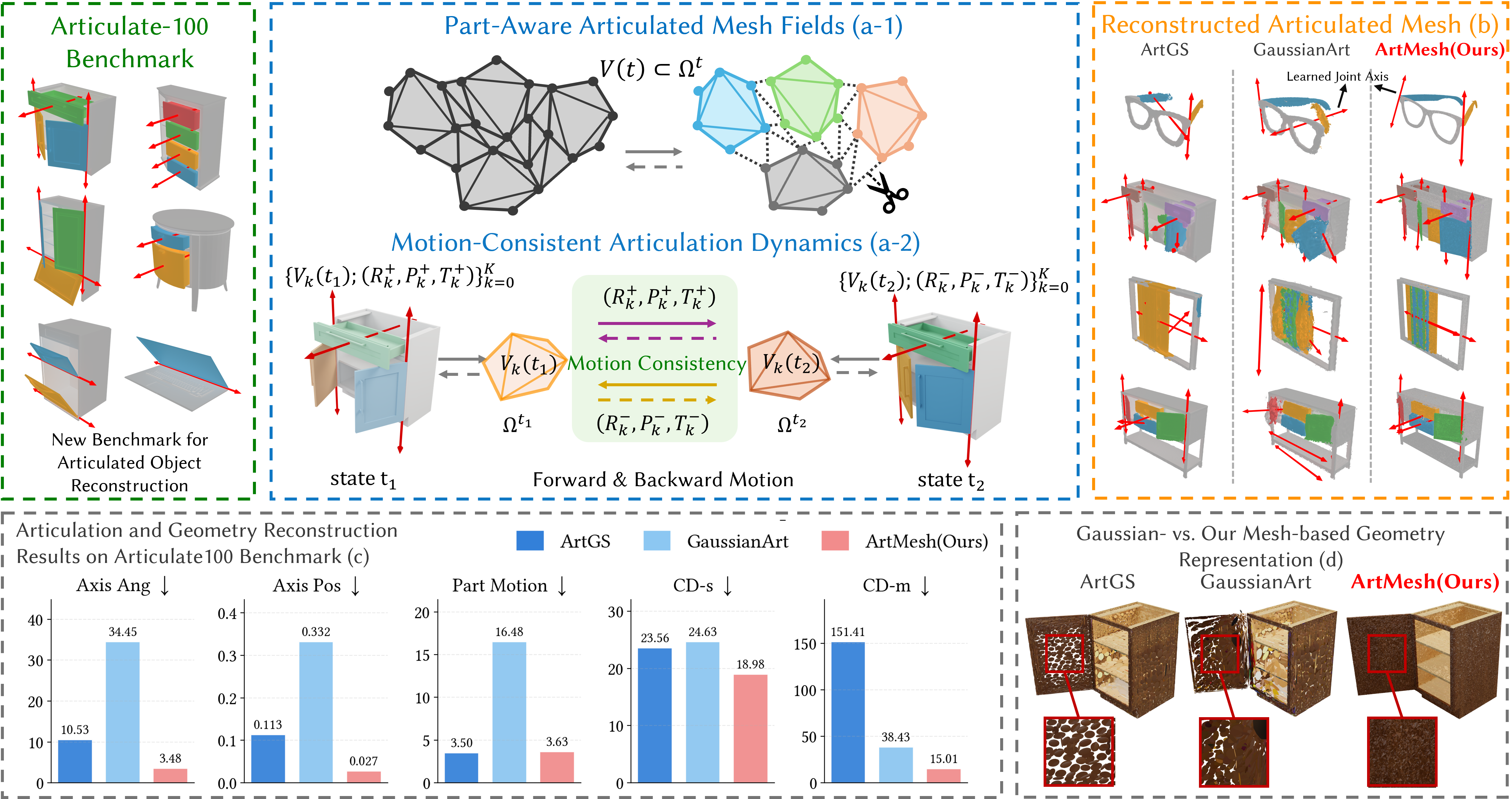
We present ArtMesh, a mesh-native method for reconstructing articulated objects explicitly as connected triangle meshes with per-part rigid motion from multi-view images in start and end states. Existing 3D Gaussian Splatting pipelines for articulated reconstruction inherit the unstructured point-based geometry of their splatting base, which provides no surface topology for reasoning about part boundaries or enforcing motion consistency along the object's connectivity. ArtMesh instead builds on a mesh-based differentiable rendering backbone, enabling part-aware dynamics to act directly on the structured topology. To make the topology compatible with articulation, we introduce part-aware restricted Delaunay remeshing, producing connected submeshes whose triangles do not cross semantic part boundaries. The dynamic mesh field then optimizes articulation using bidirectional Vertex-wise Motion Consistency on transported mesh vertices and Pixel-wise Motion Consistency on rendered RGB-D observations. We introduce Articulate-100, a new benchmark of 100 articulated objects spanning 16 PartNet-Mobility categories. On this benchmark, ArtMesh outperforms prior 3DGS-based pipelines in joint parameter estimation and part-level geometric reconstruction, with the largest gains on objects with many movable parts.
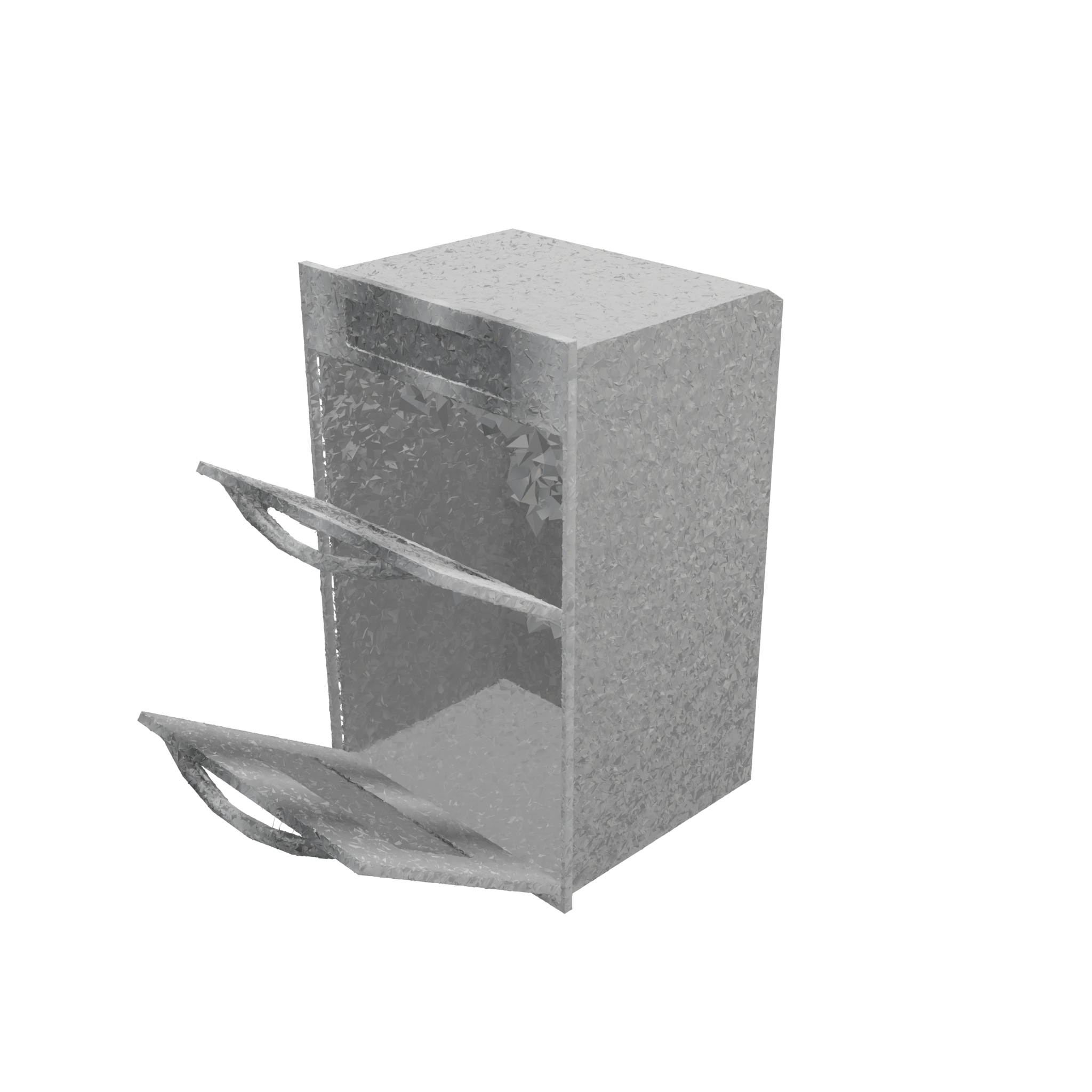
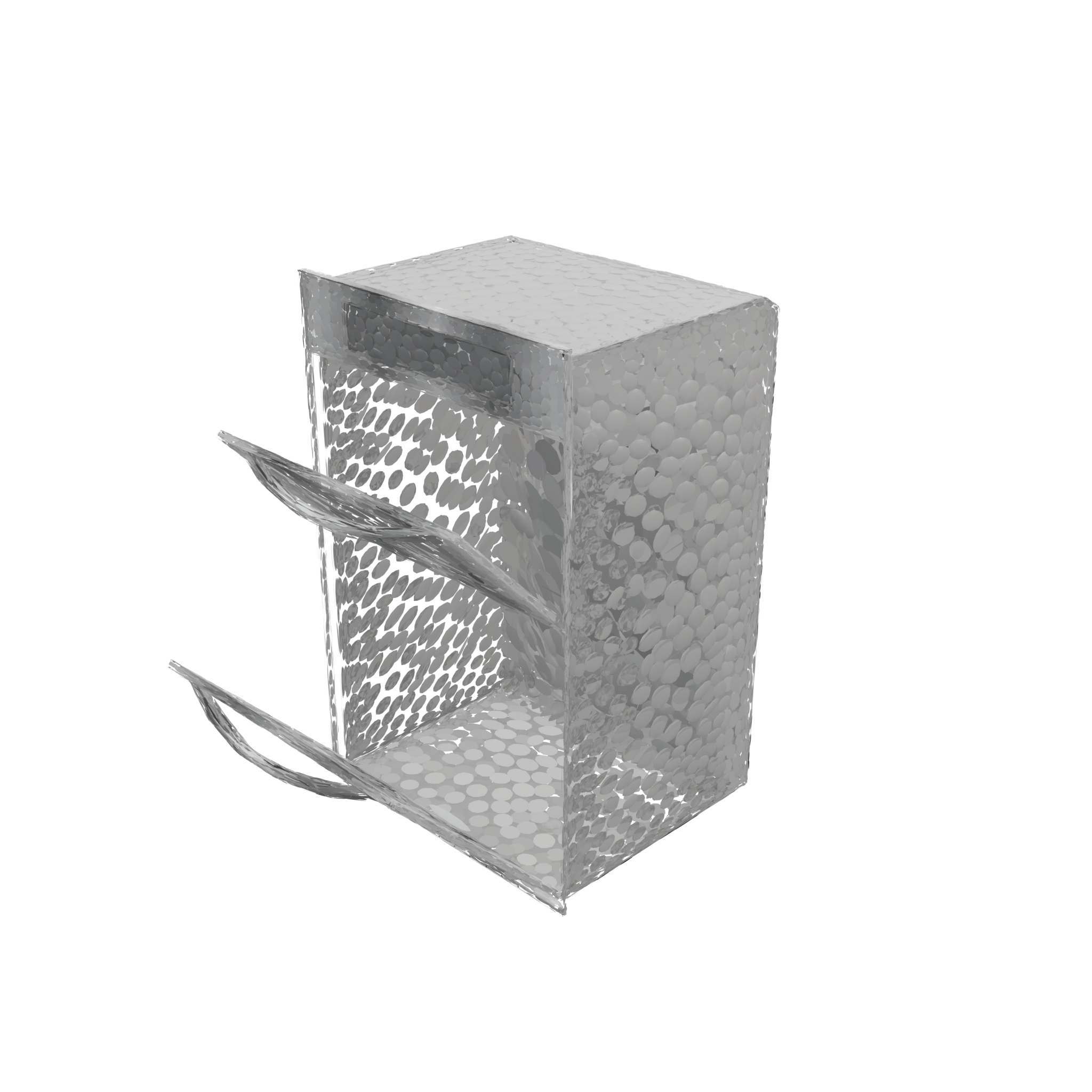
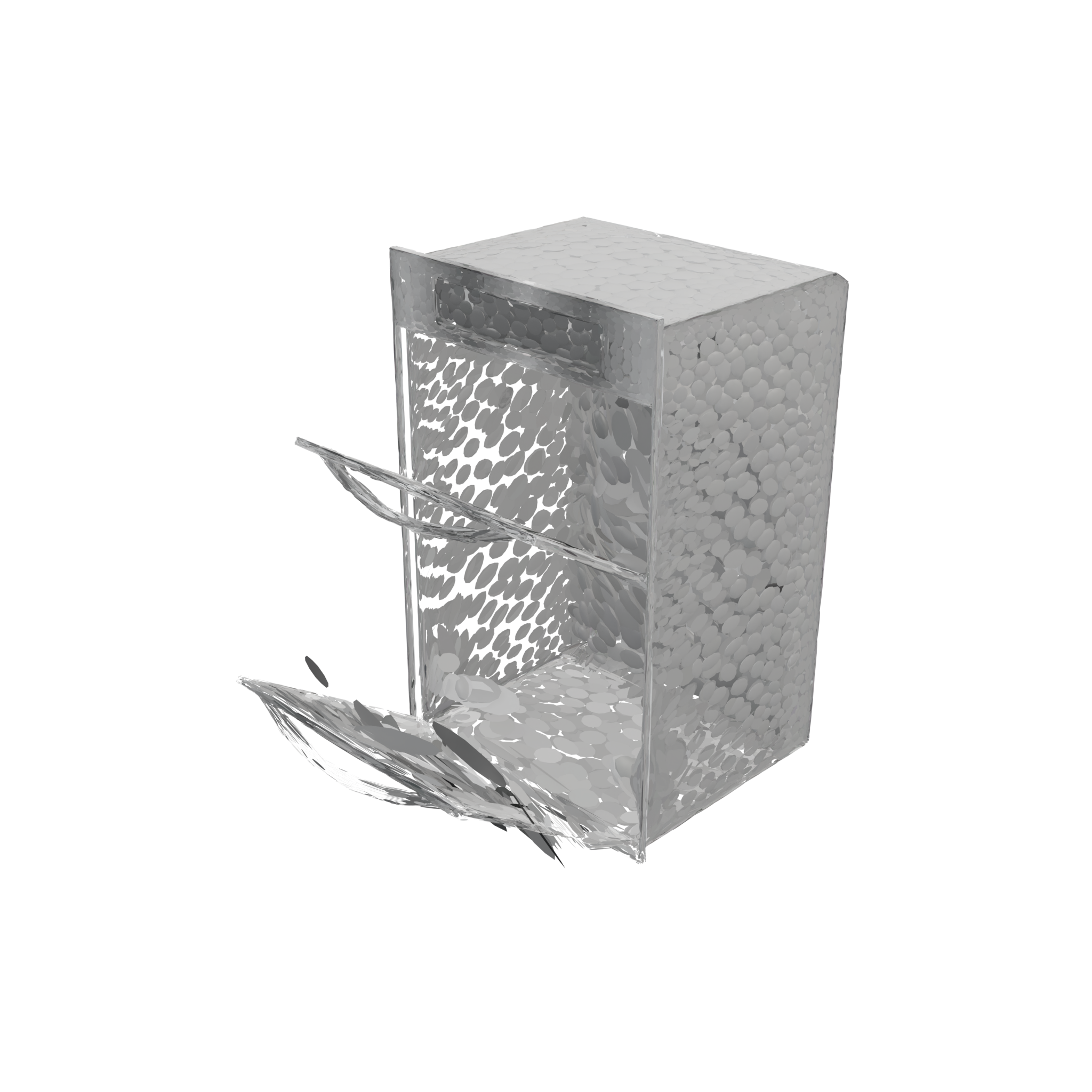
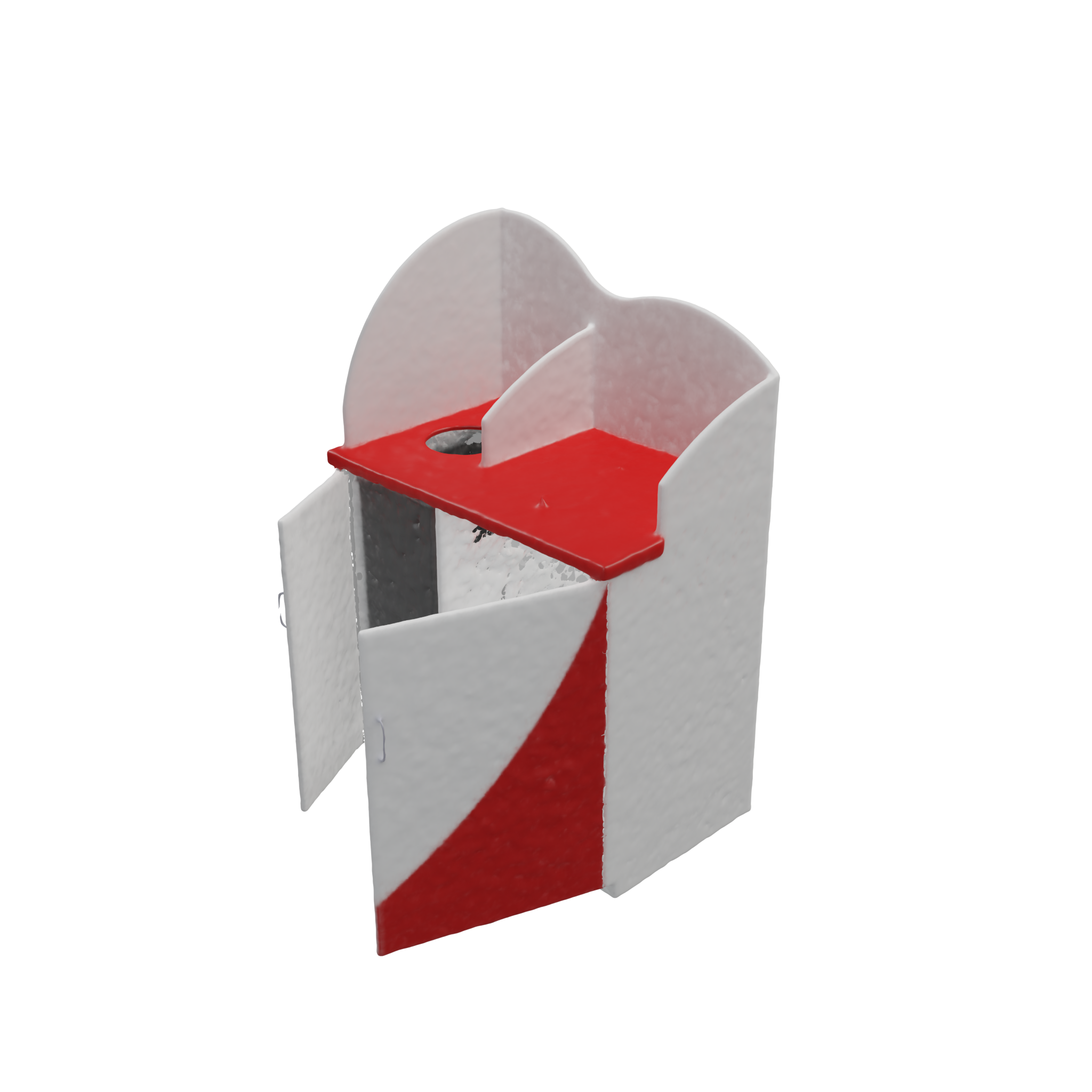
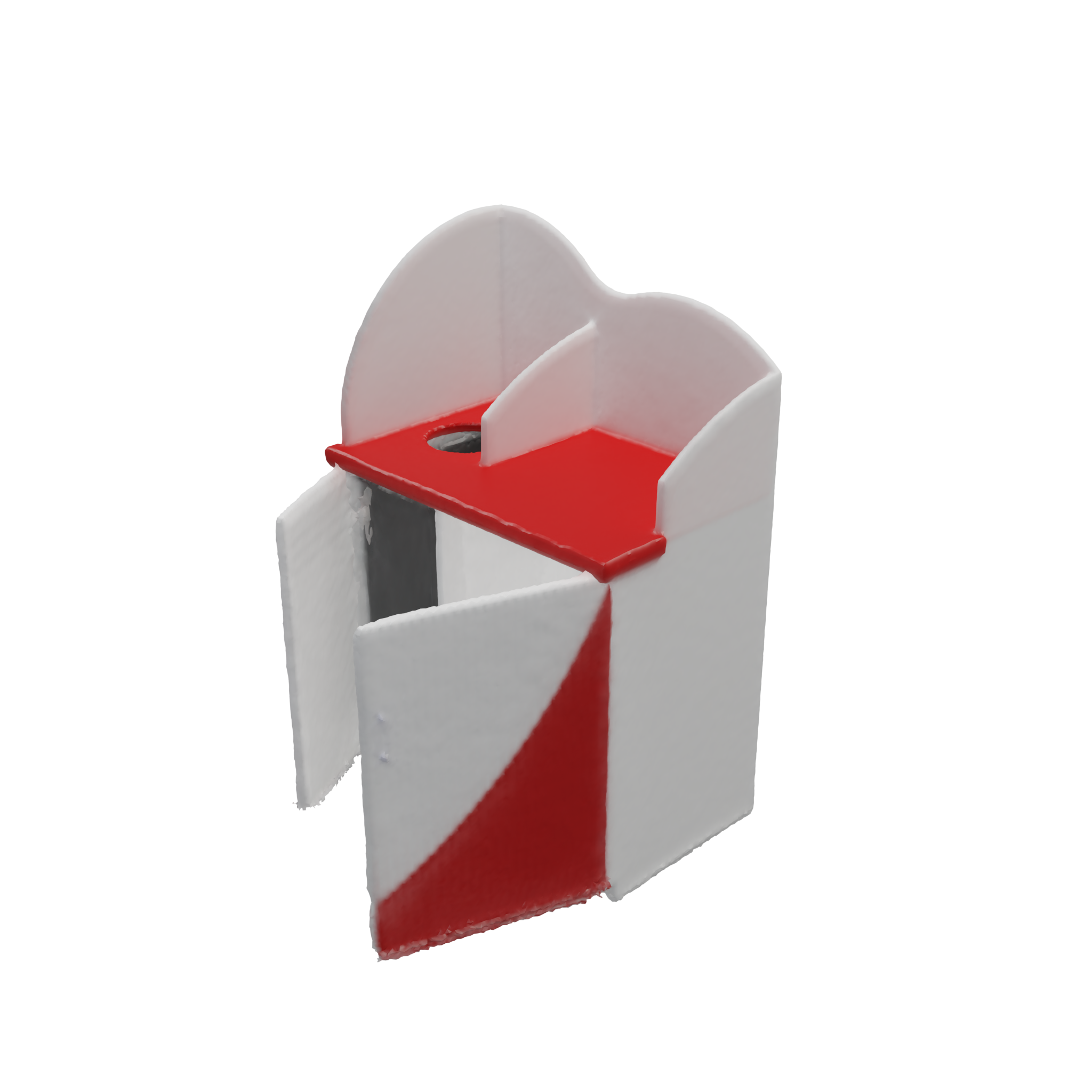
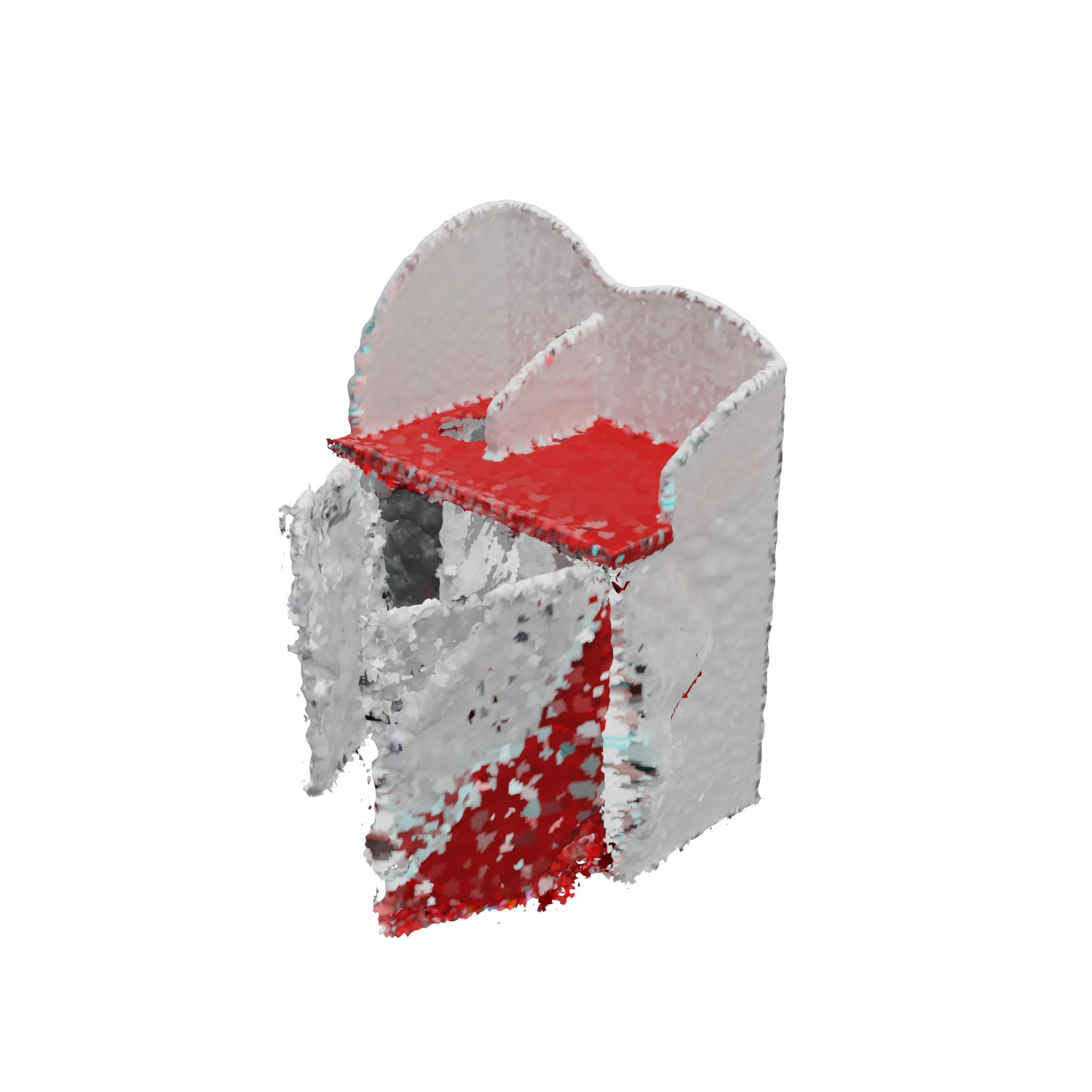
Geometry Representation and Mesh Quality Comparison
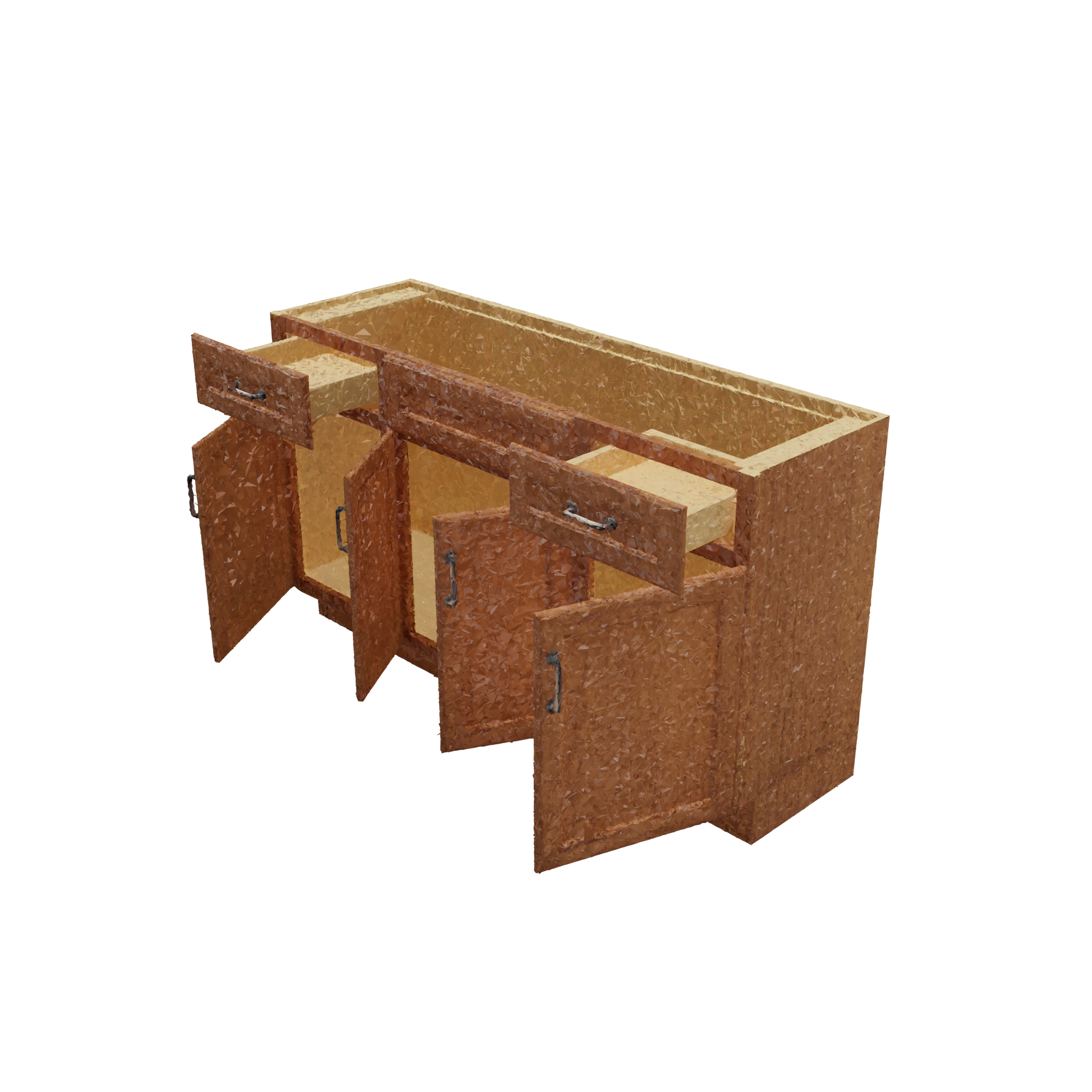
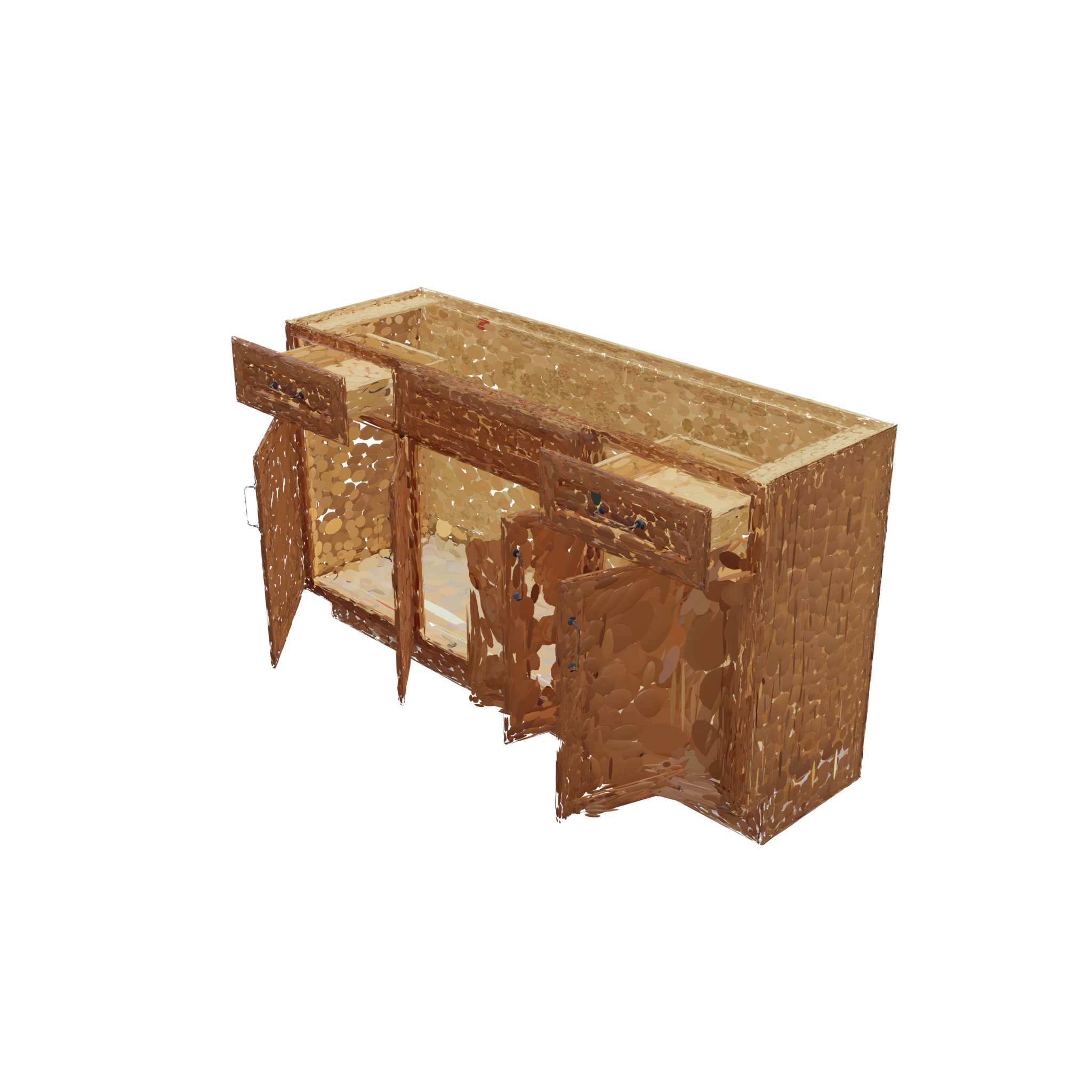
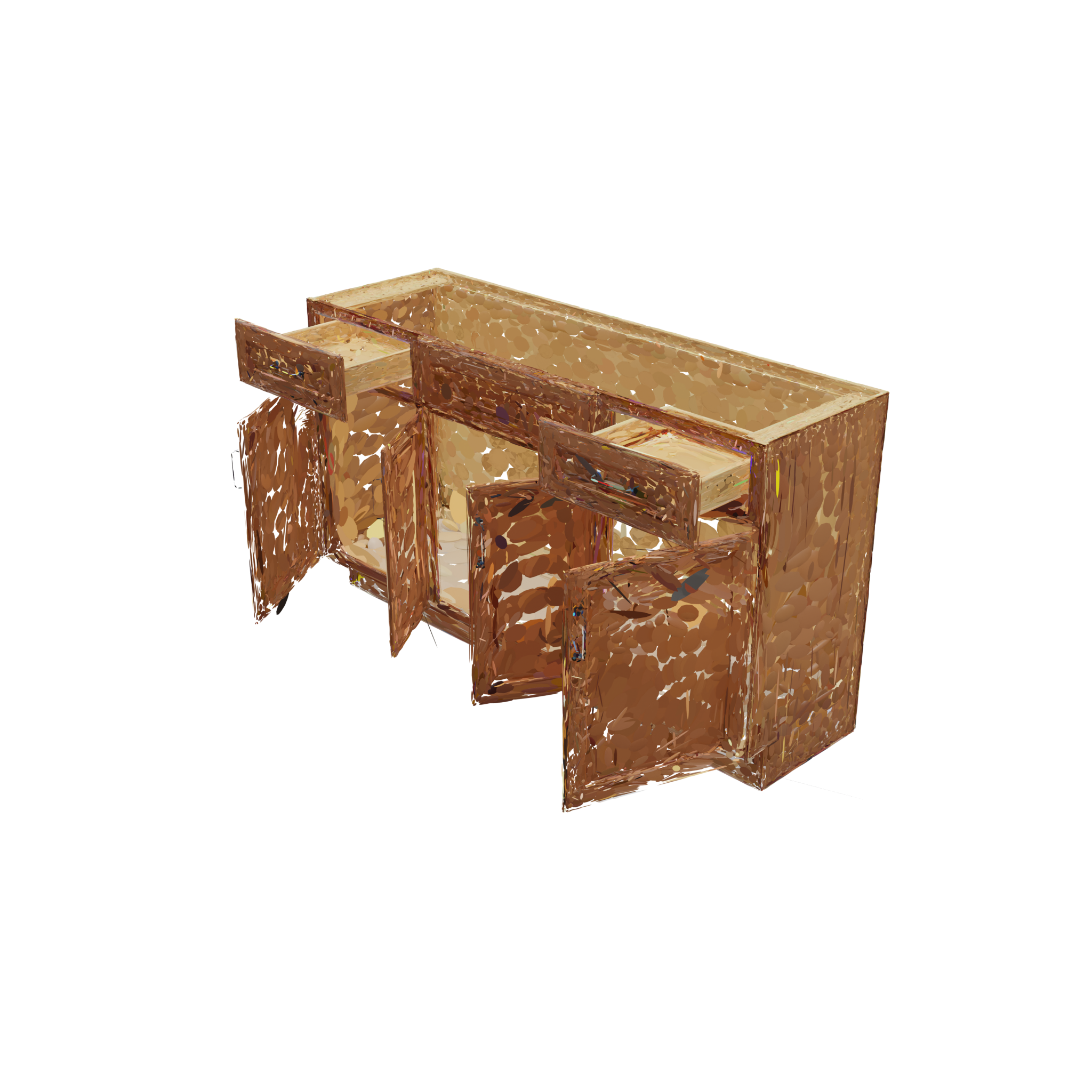
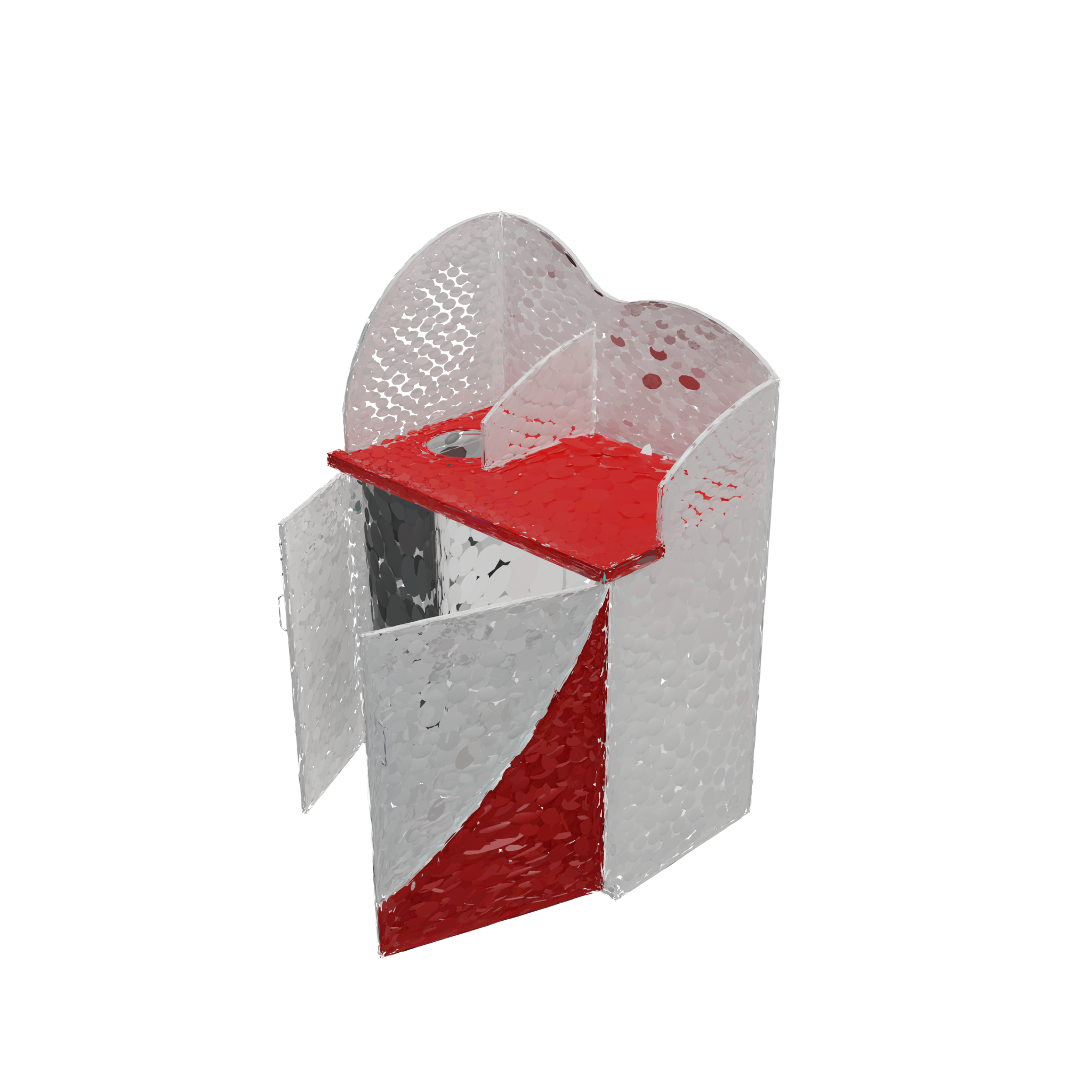
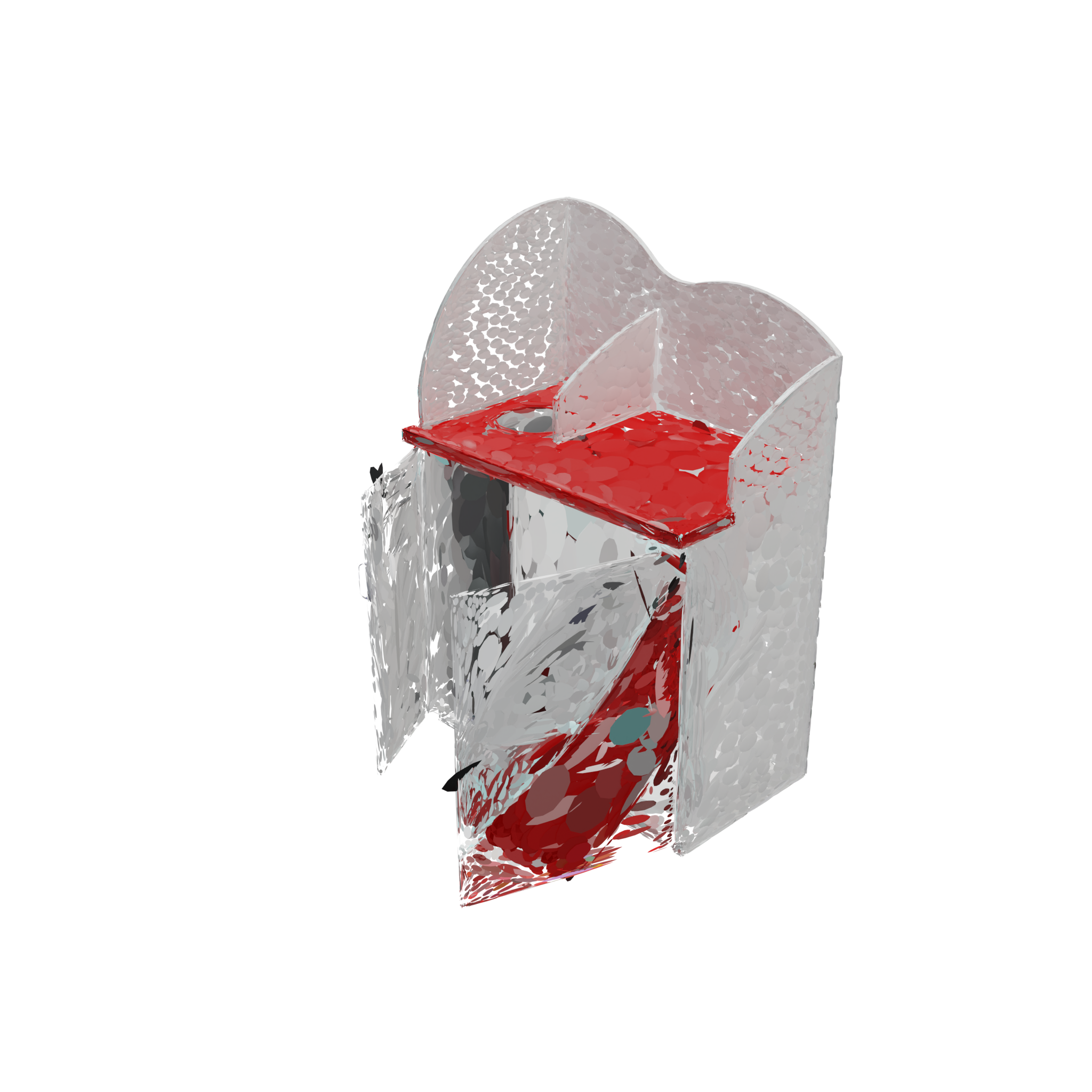
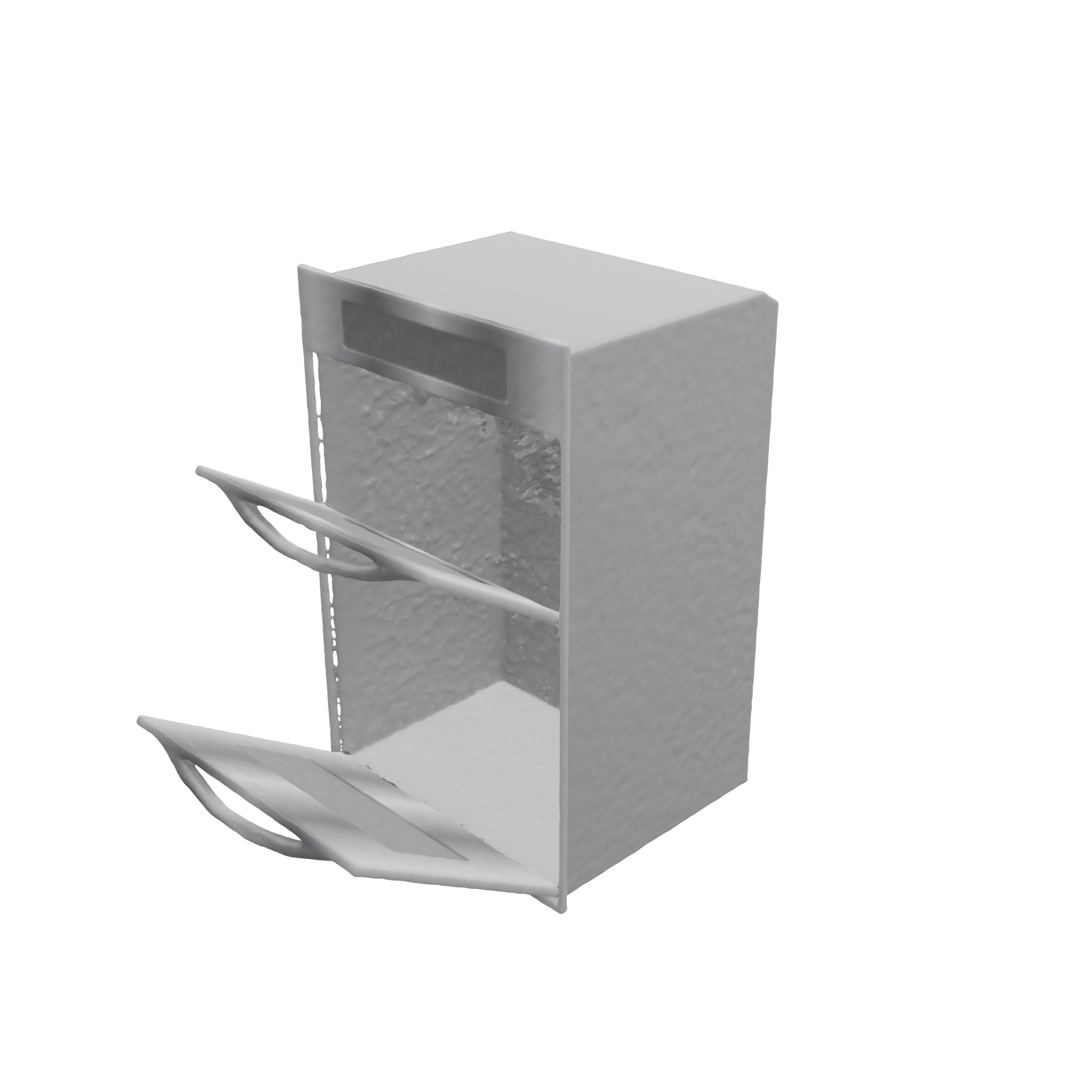
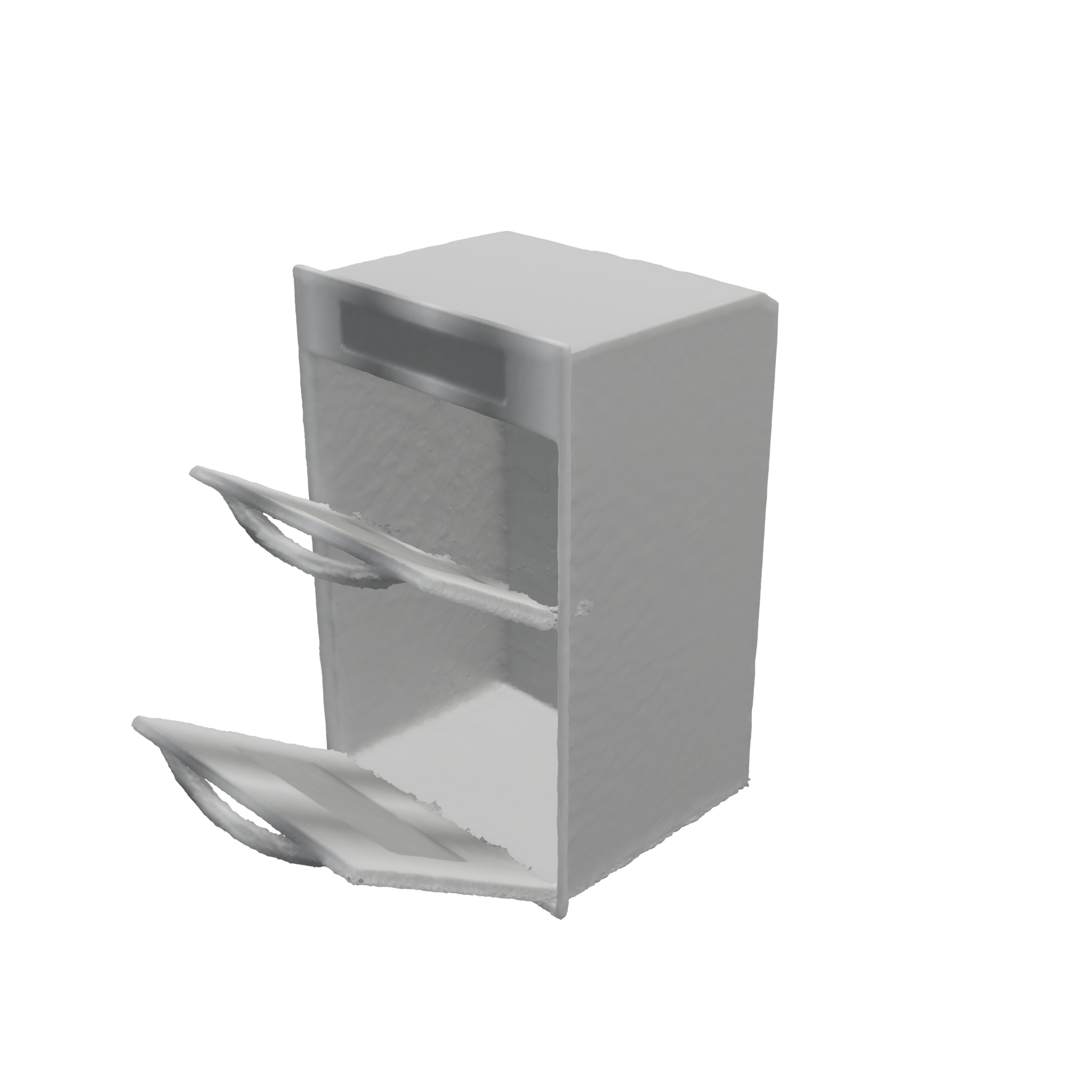
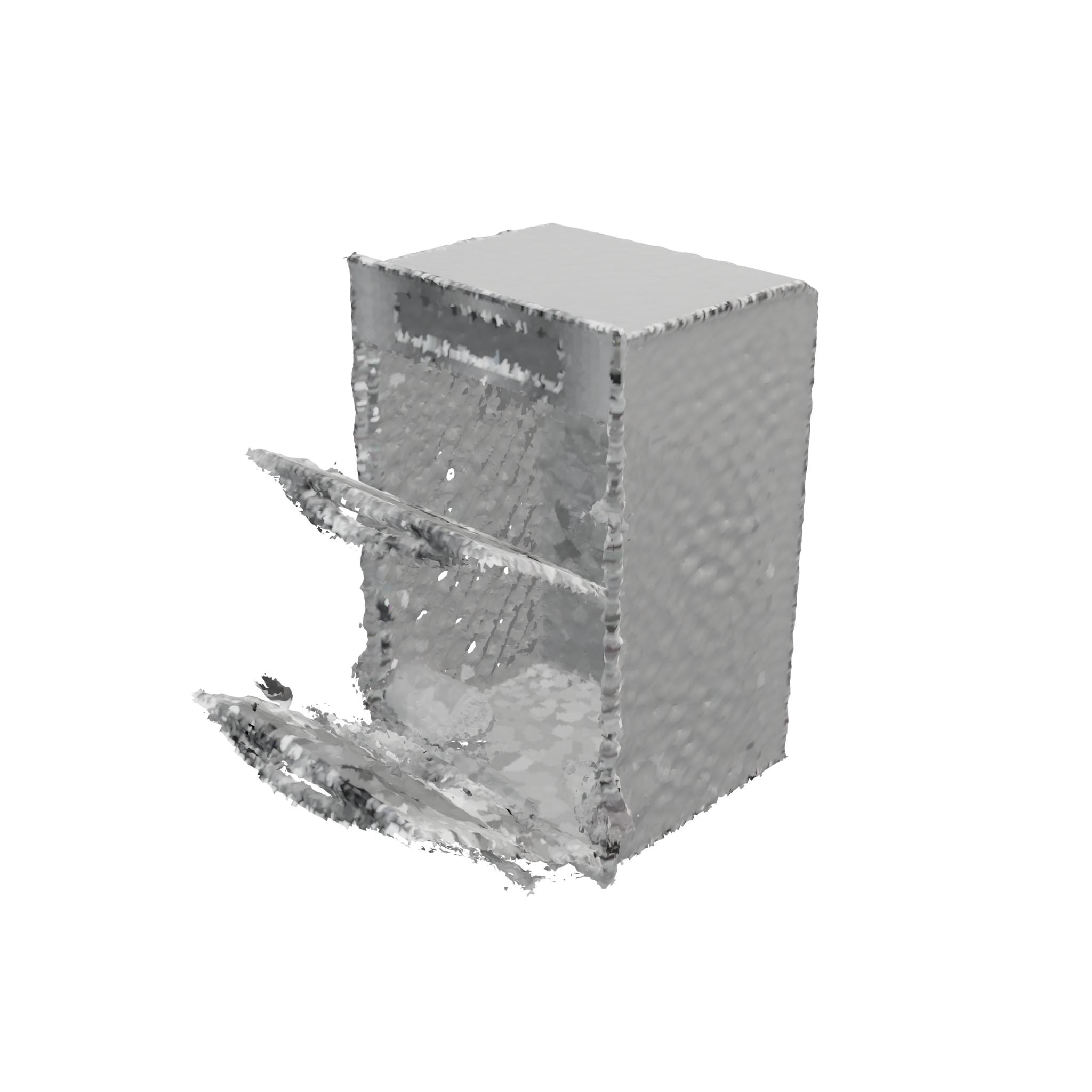
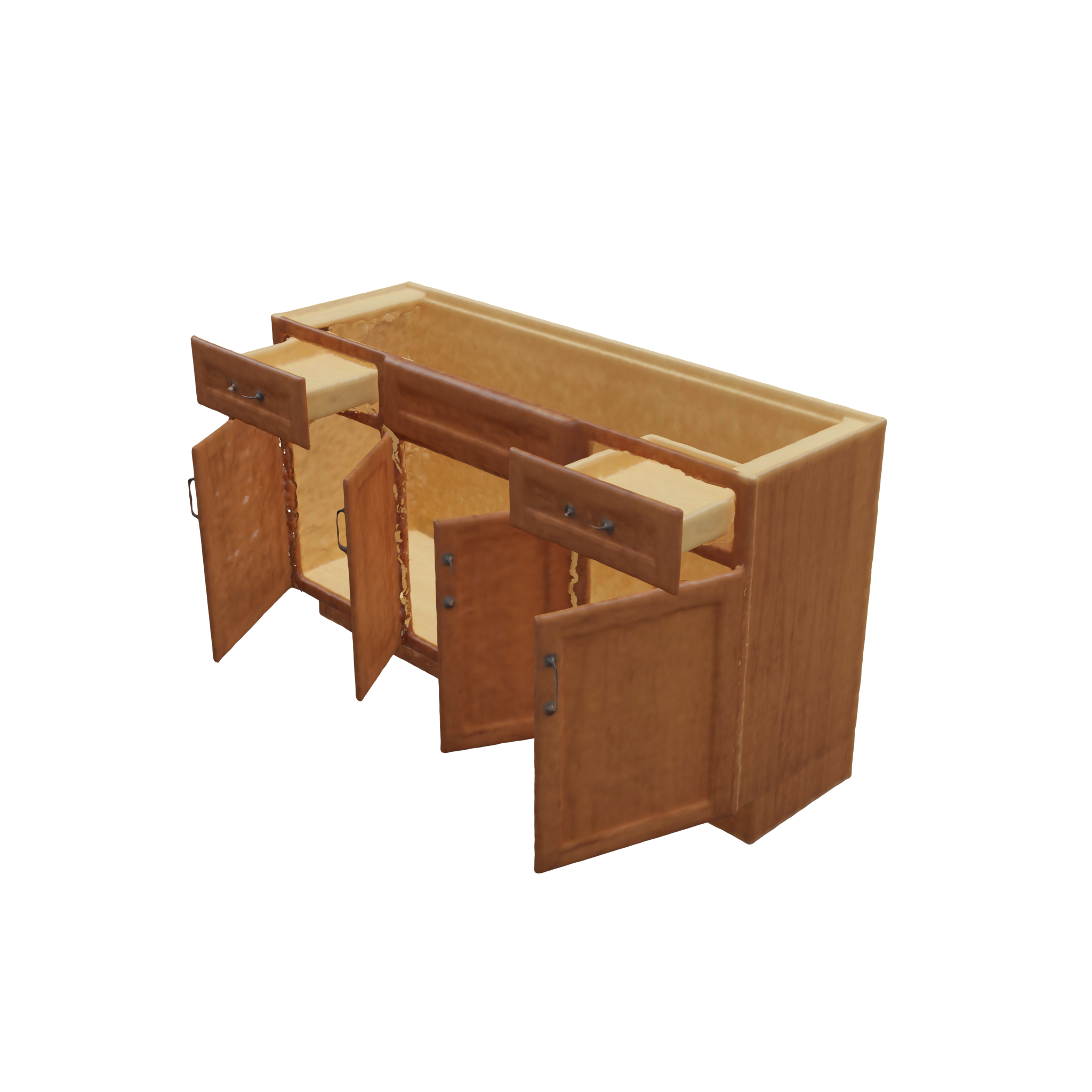
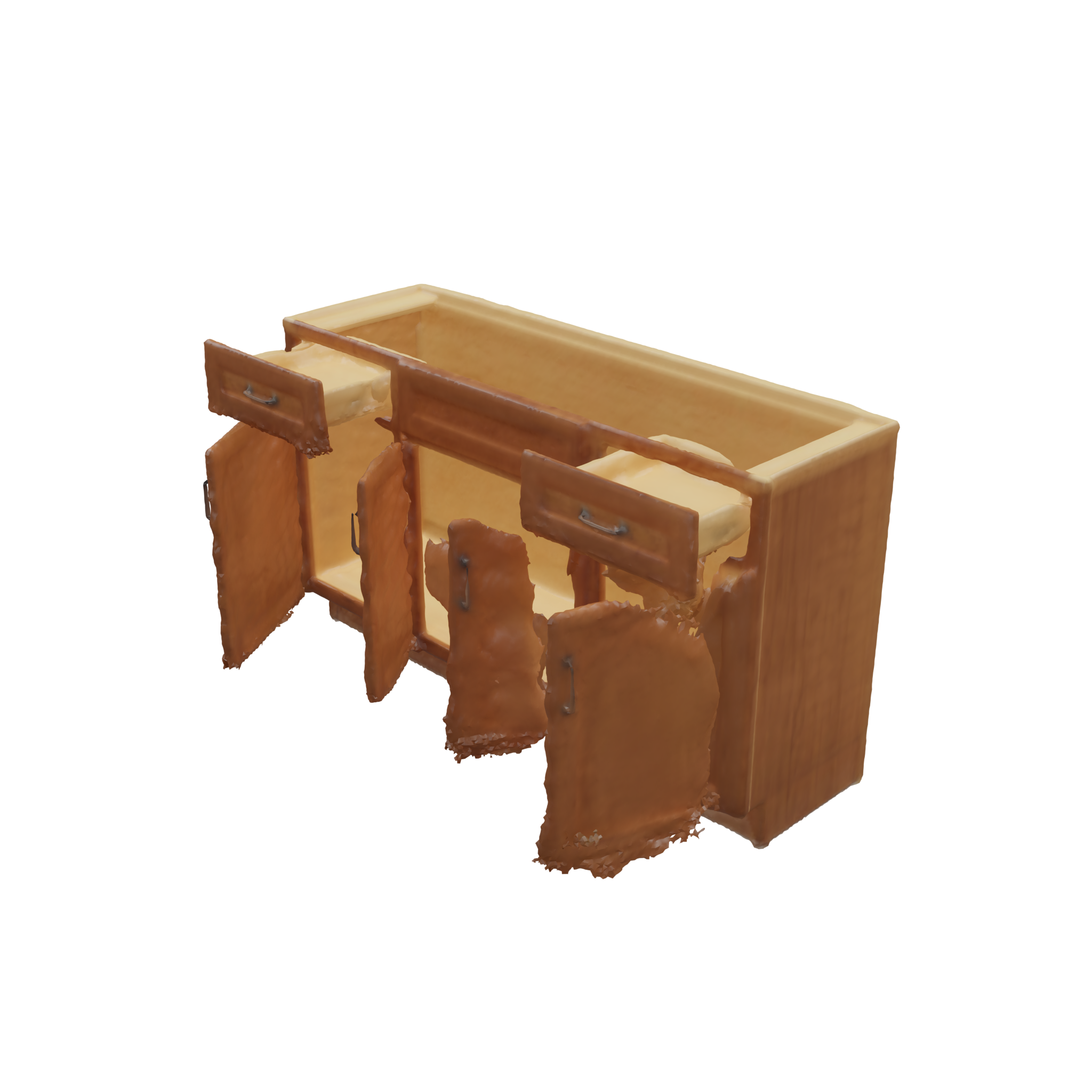
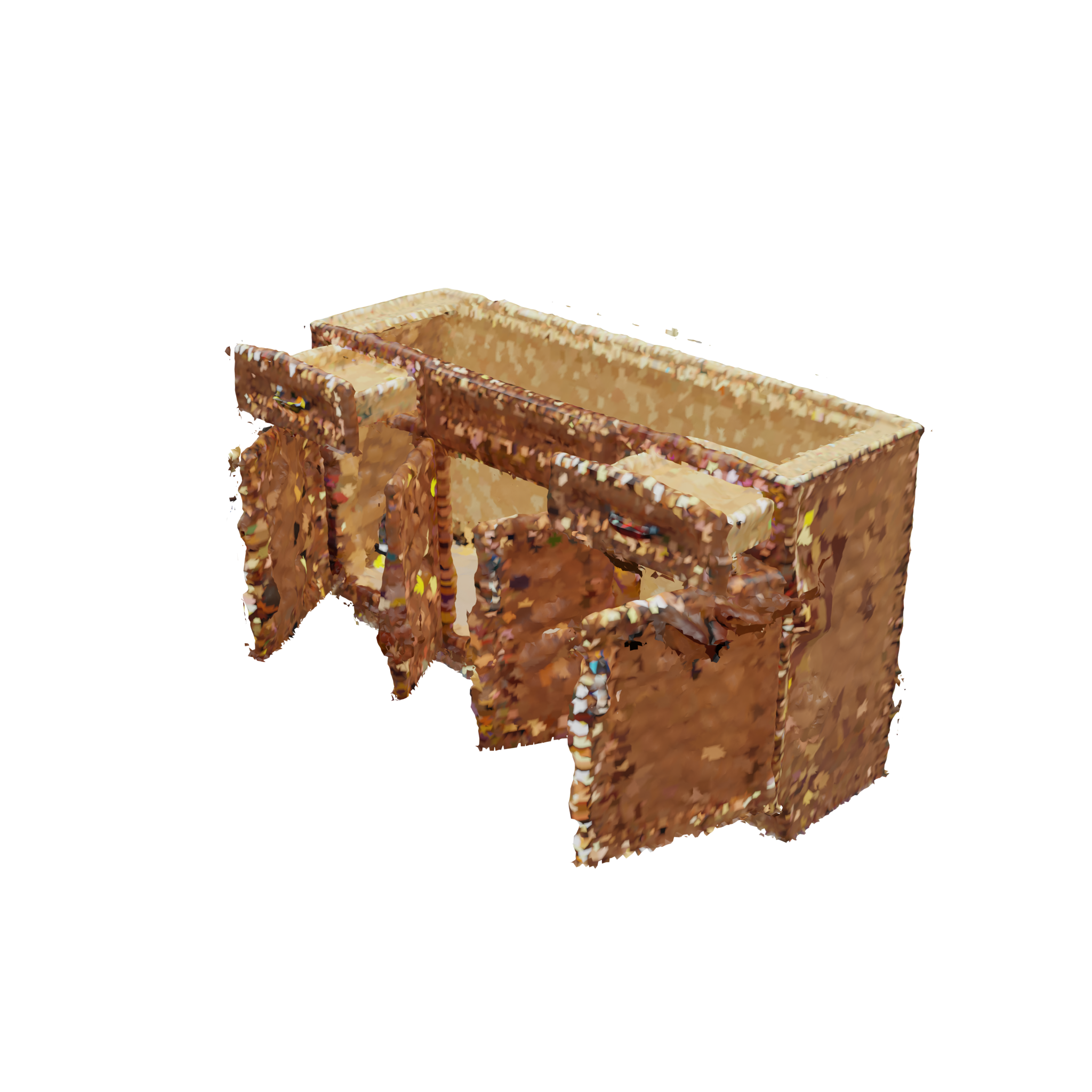
Left: native reconstructed surfaces. ArtGS and
GaussianArt produce unstructured Gaussians with gaps and fragmented
coverage; ArtMesh outputs a connected triangle mesh end-to-end, with
no conversion step.
Right: the same comparison after TSDF-based
post-processing on every method's output — ArtMesh still recovers
cleaner geometry.
Geometry Representation
ArtMesh (ours)
ArtGS
GaussianArt
TSDF Post-processed
ArtMesh (ours)
ArtGS
GaussianArt
Results
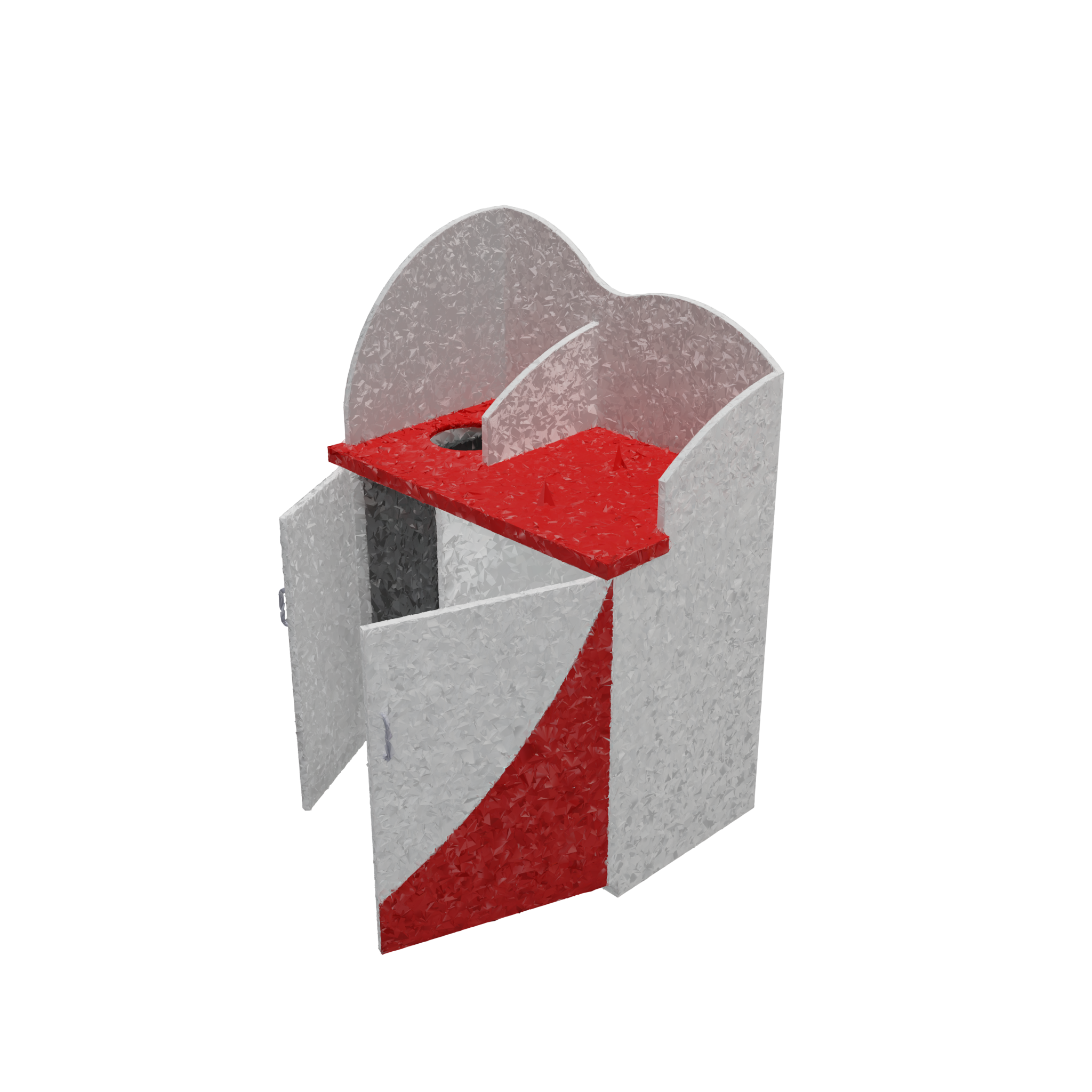
Reconstructed articulated objects from the Articulate-100 benchmark; each video shows the start→end state interpolation followed by a 360° orbit.
Eyeglasses 101293
Oven 7187
Pliers 100180
StorageFurniture 45612
StorageFurniture 45940
Table 22301
Table 23372
Table 23724
Window 103044
Export into Simulator
Based on the part-based reconstruction, ArtMesh's reconstructed object can be
directly transformed to URDF format and exported into existing simulators,
enabling further embodied-AI applications, e.g. humanoid interactions.
The viewers below load the exported URDFs in your browser — rotate
(left-click drag), zoom (scroll), pan (right-click drag), and drag any
movable part to actuate its joint.
Eyeglasses 101293
Oven 7187
Pliers 100180
StorageFurniture 45612
StorageFurniture 45940
Table 22301
Table 23372
Table 23724
Window 103044
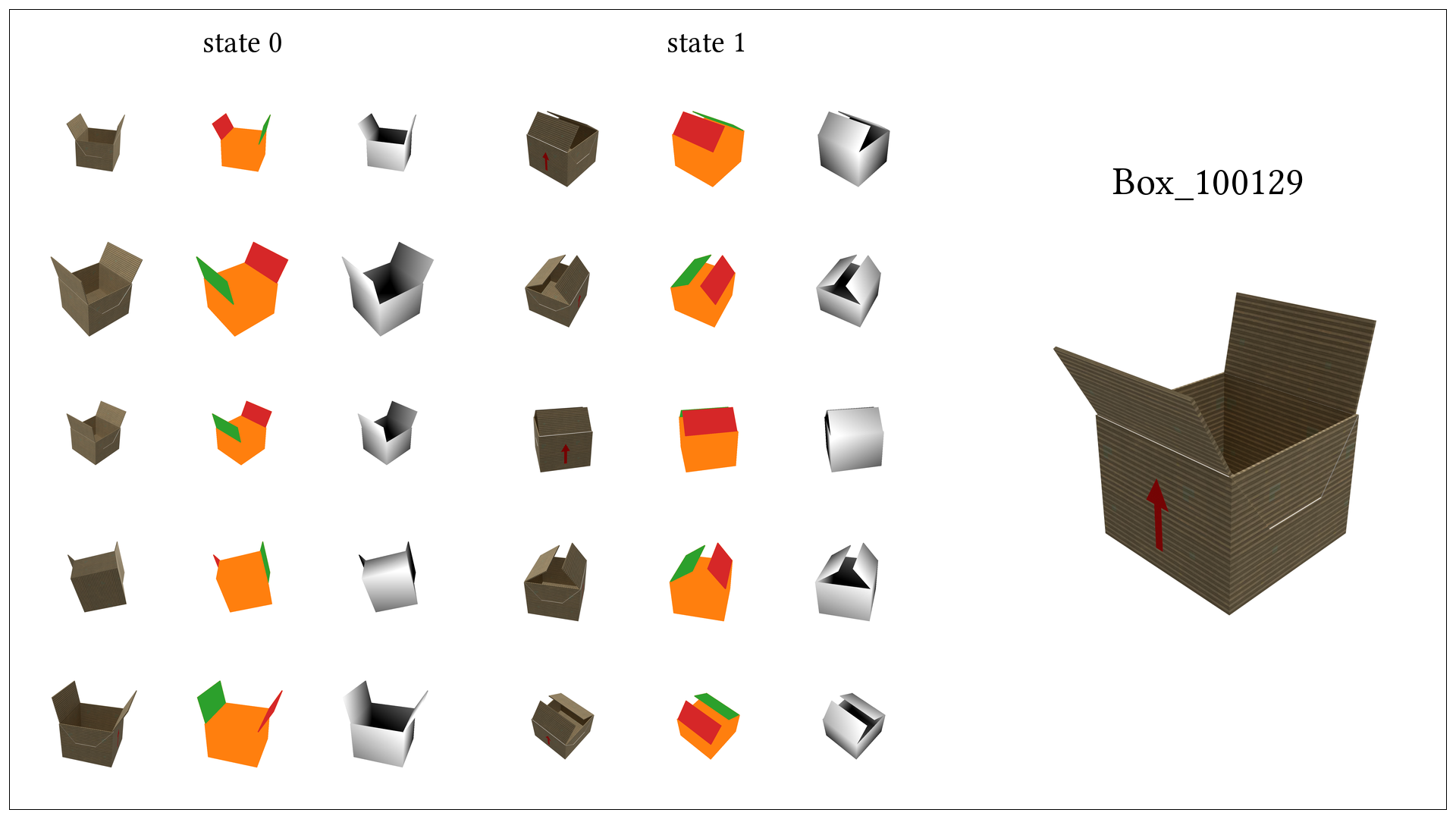
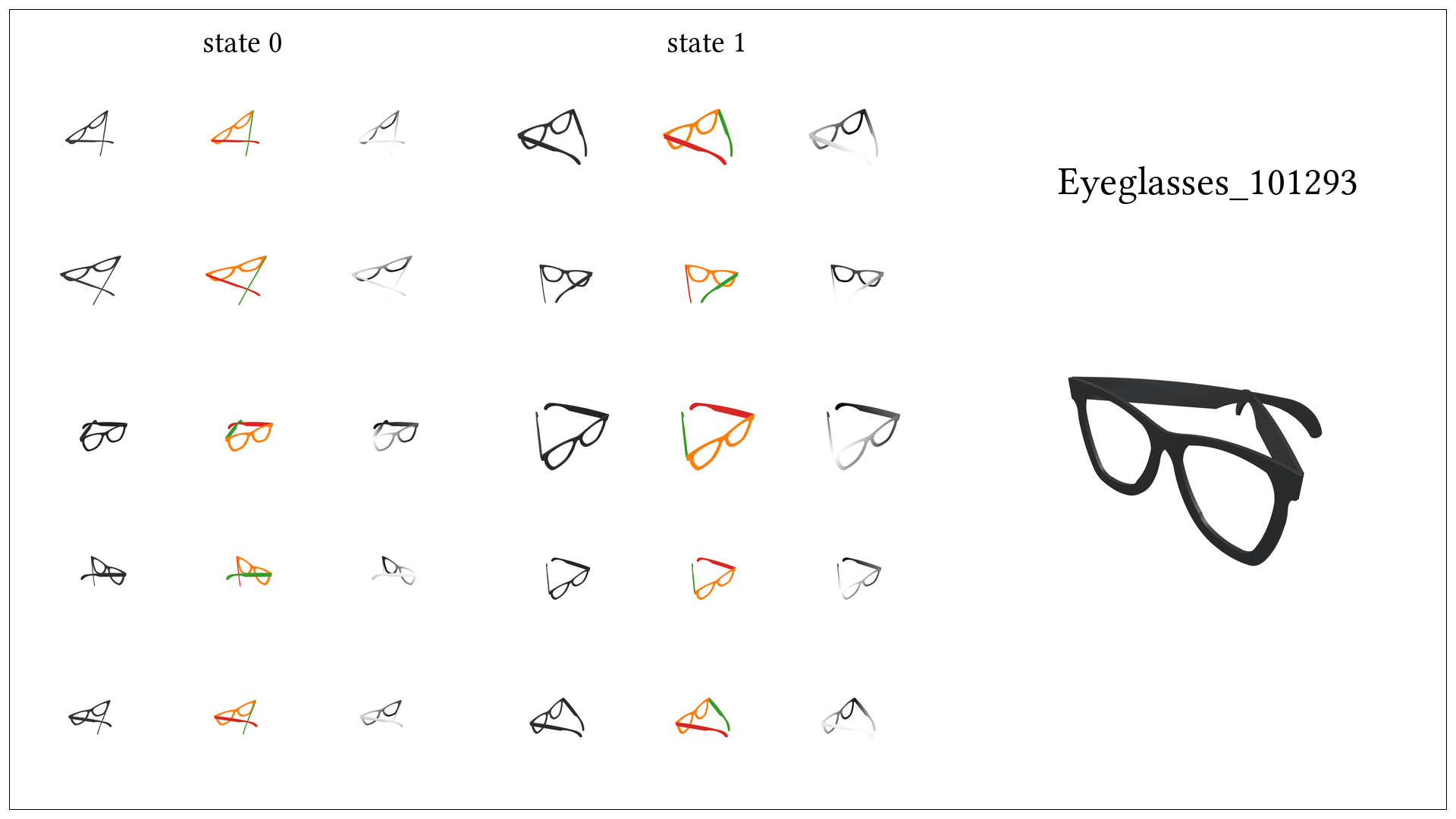
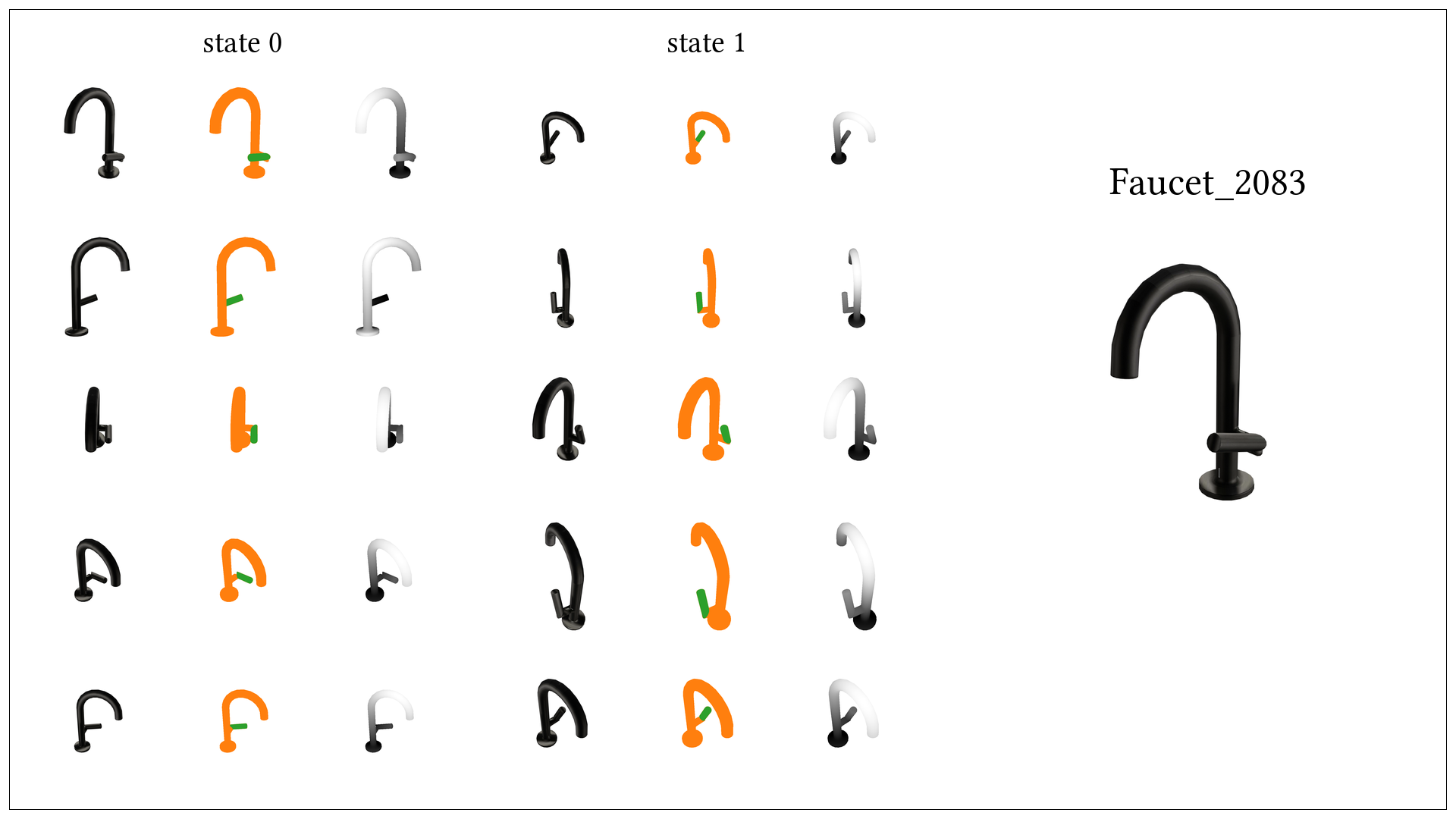
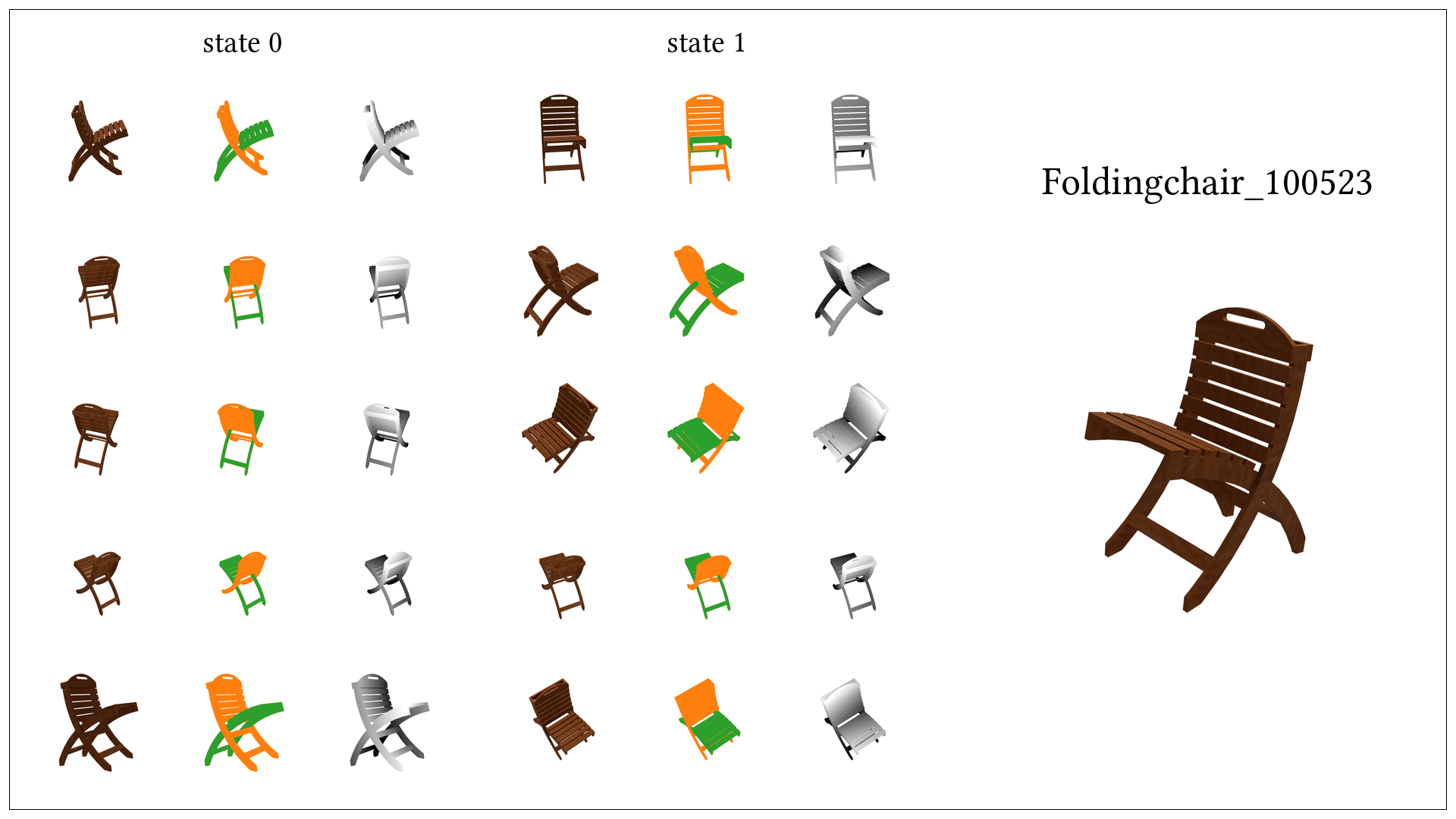
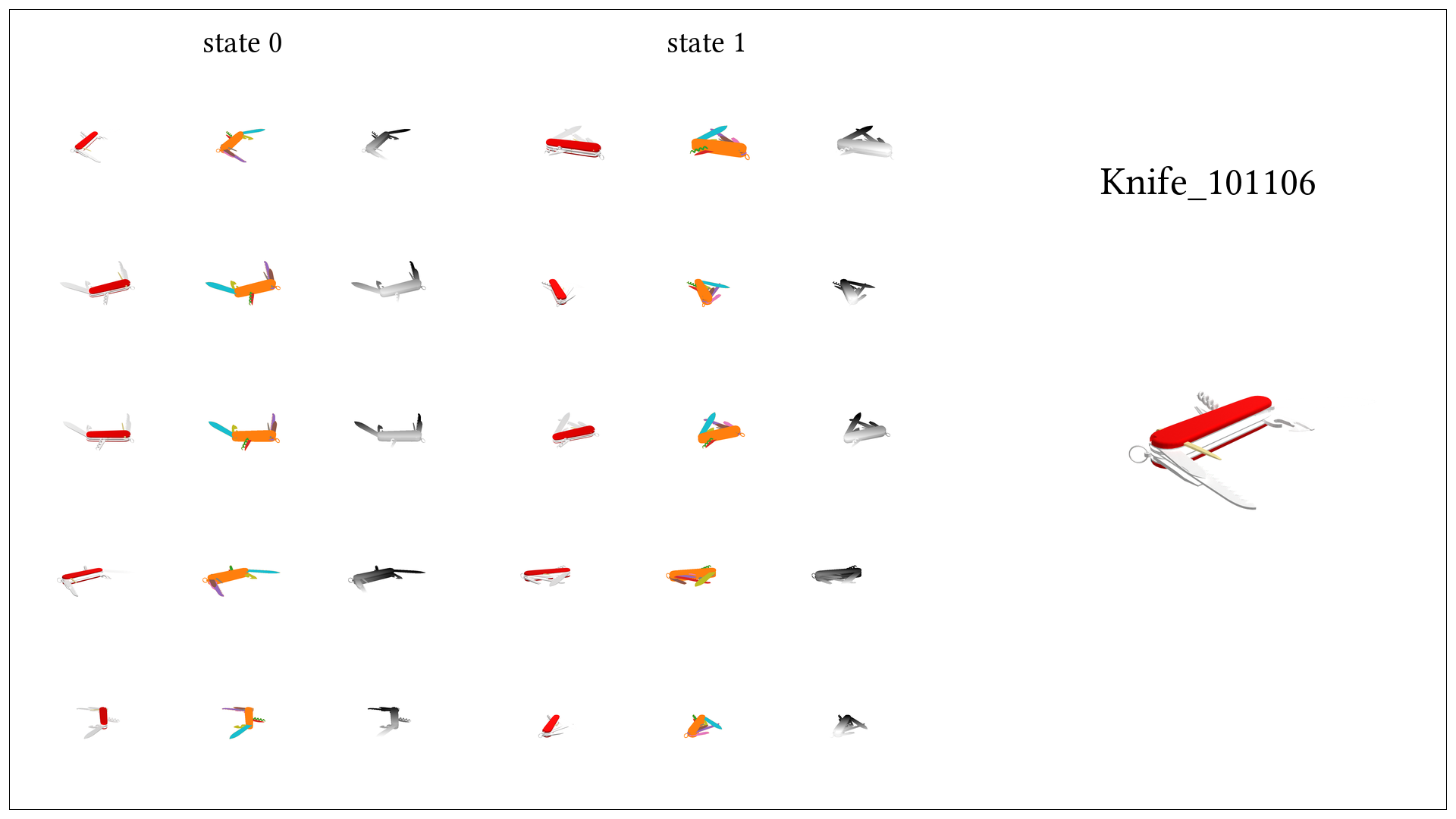
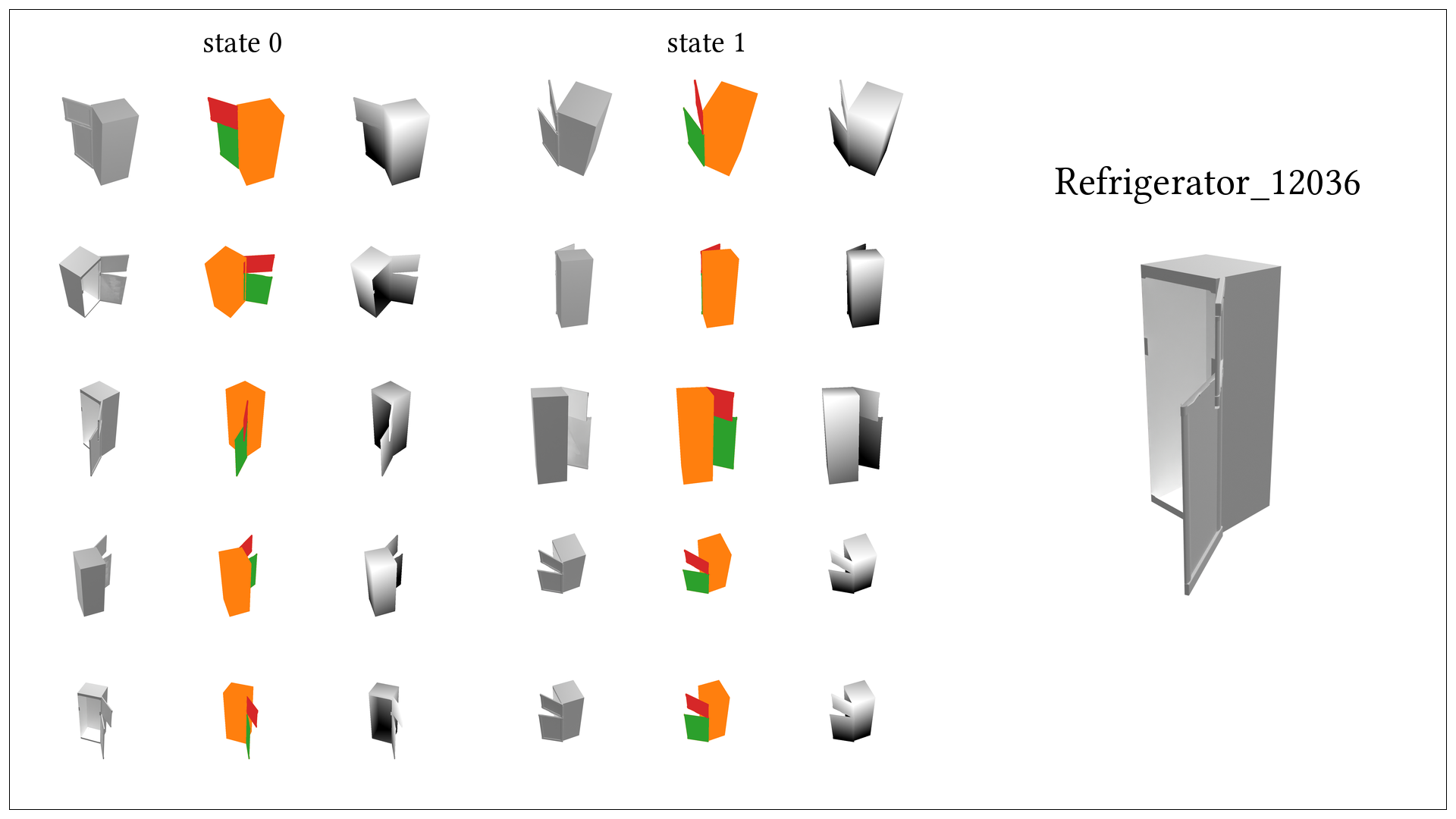
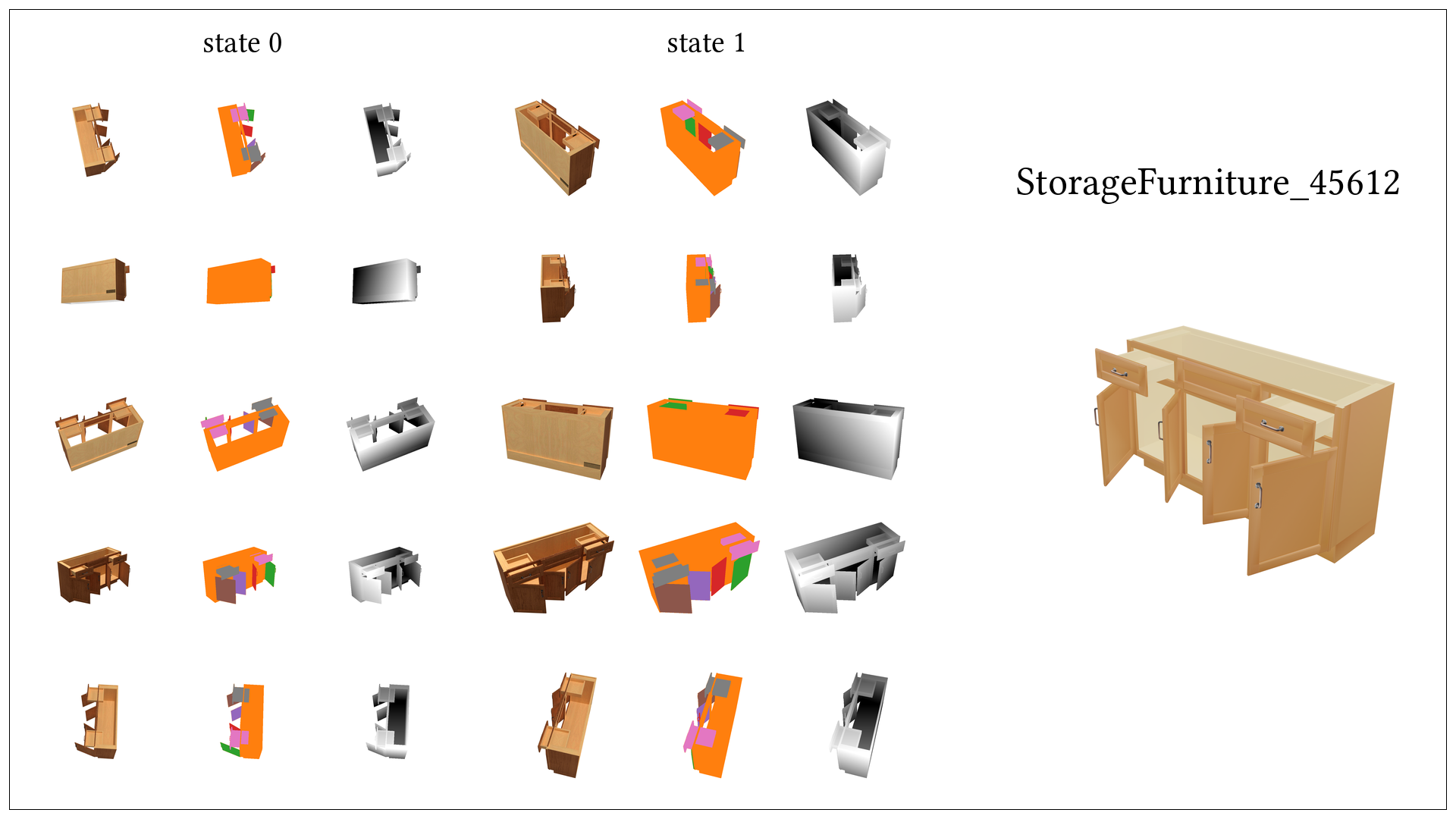
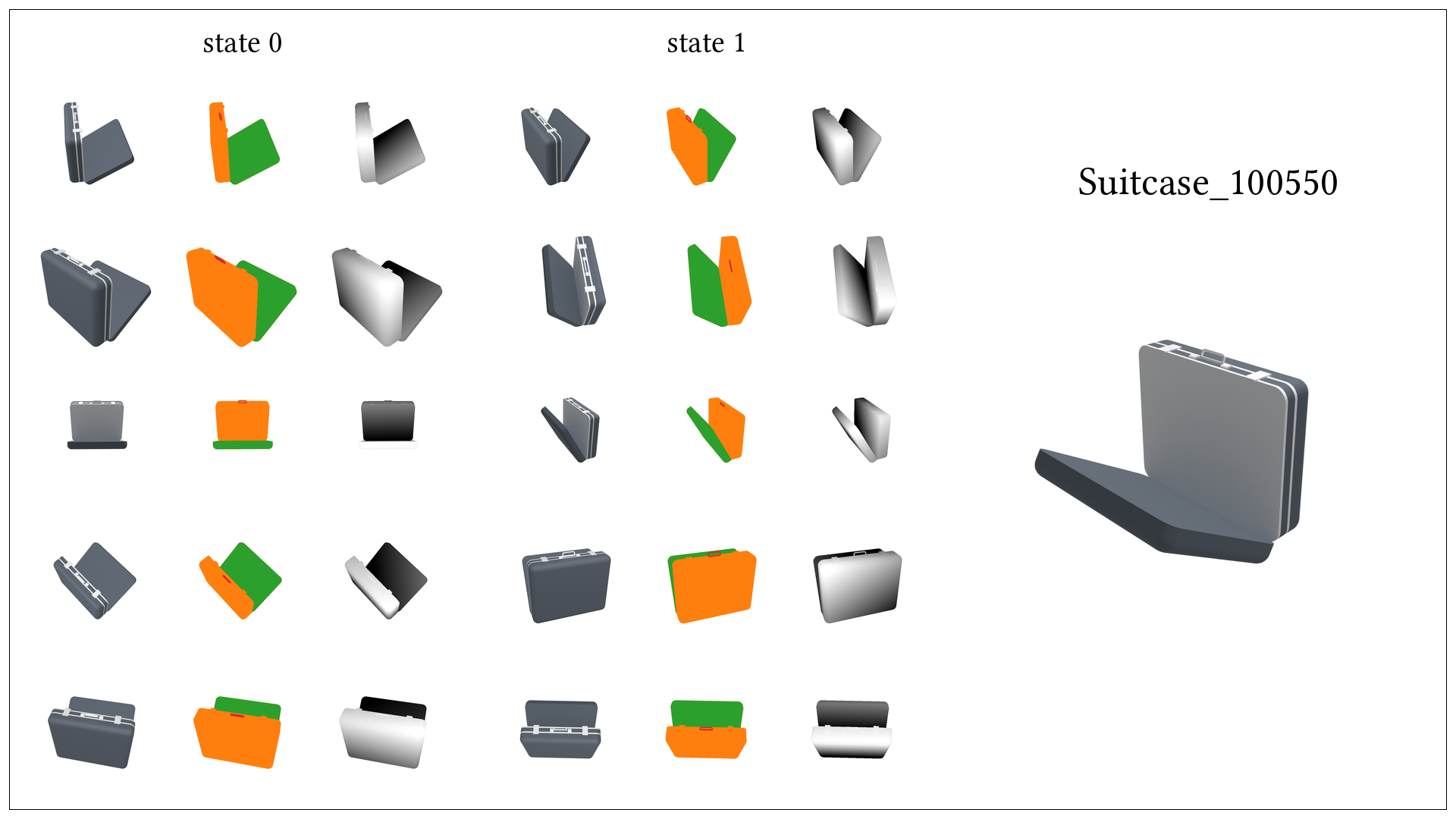
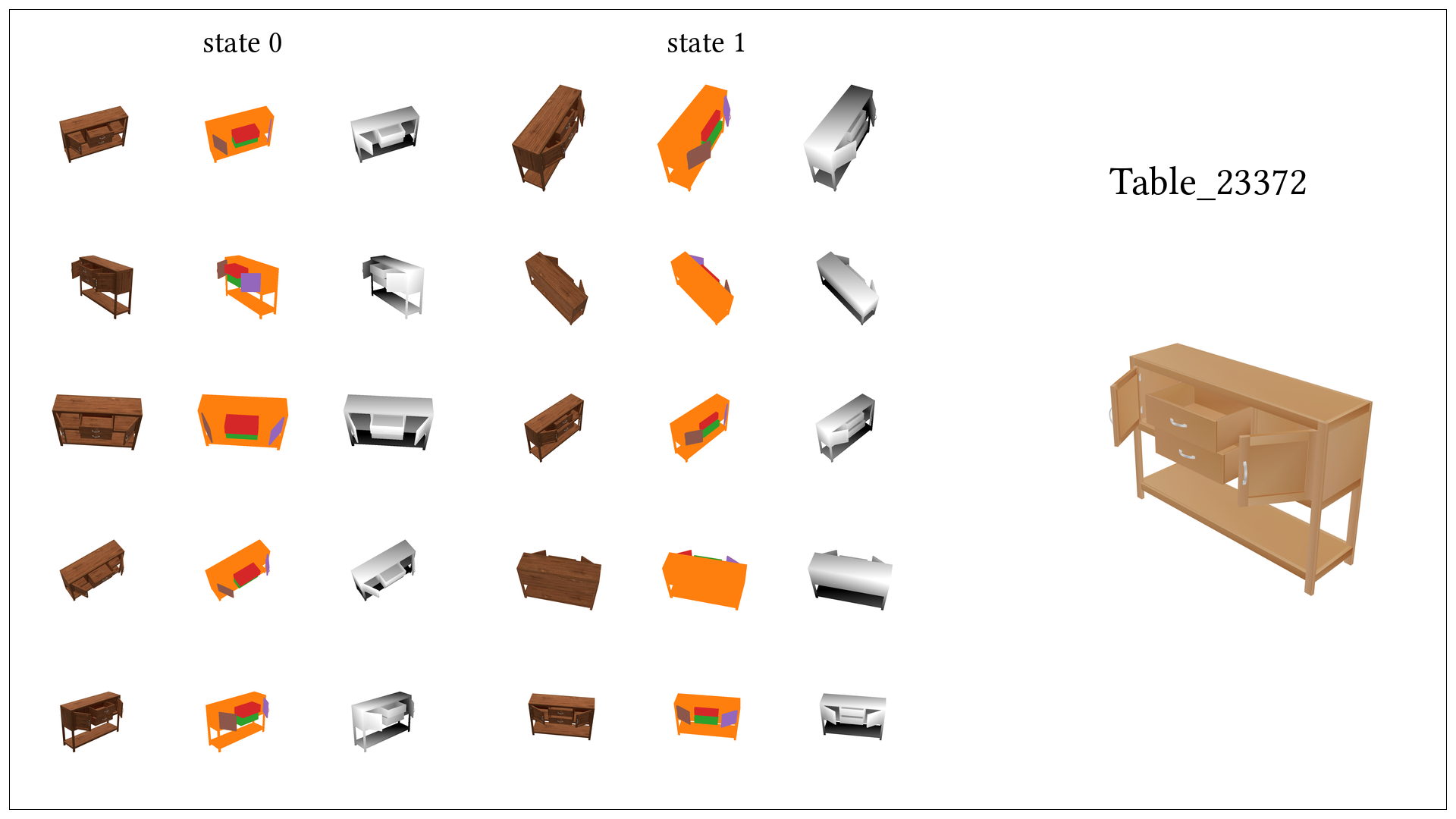
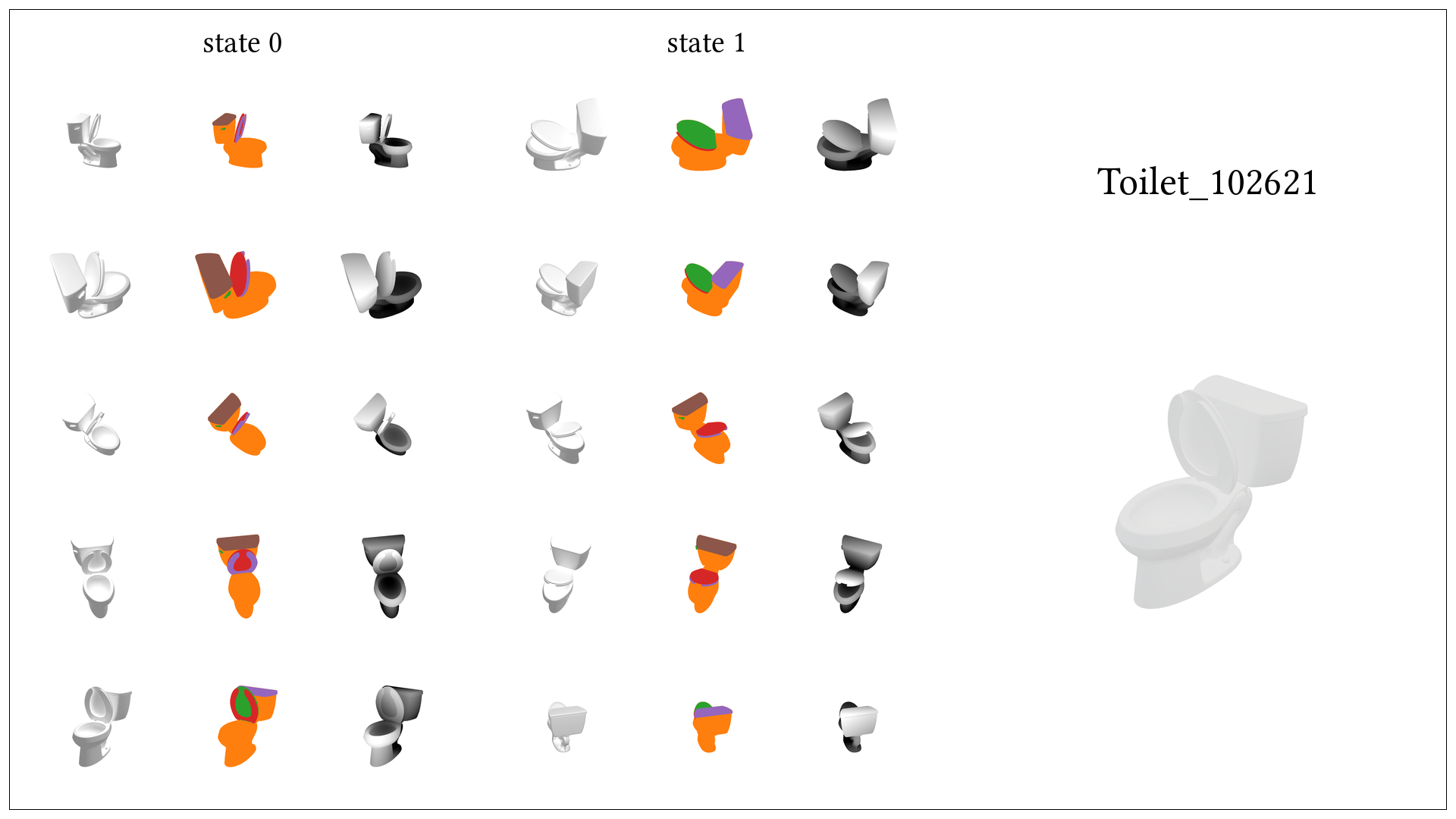
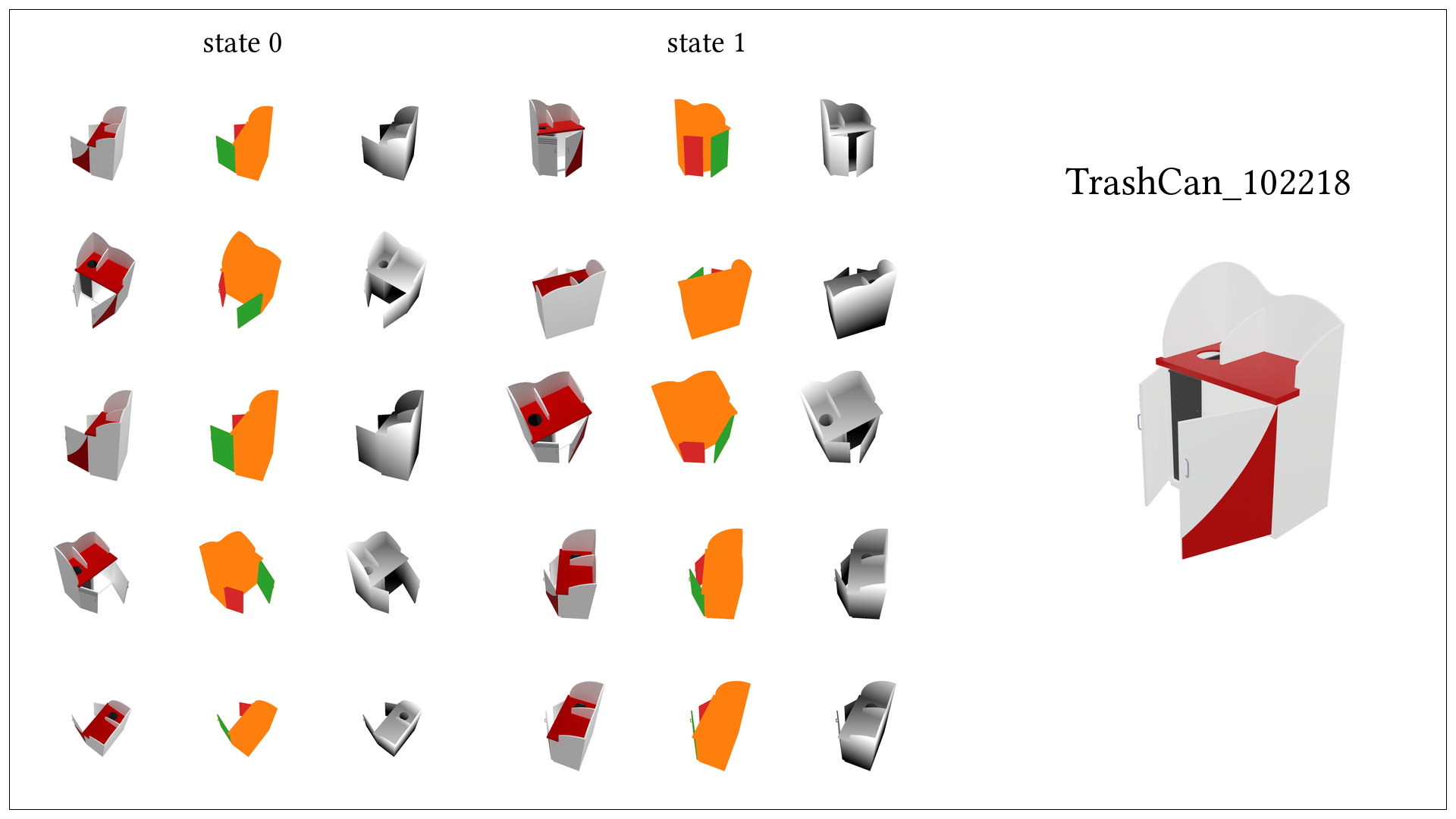
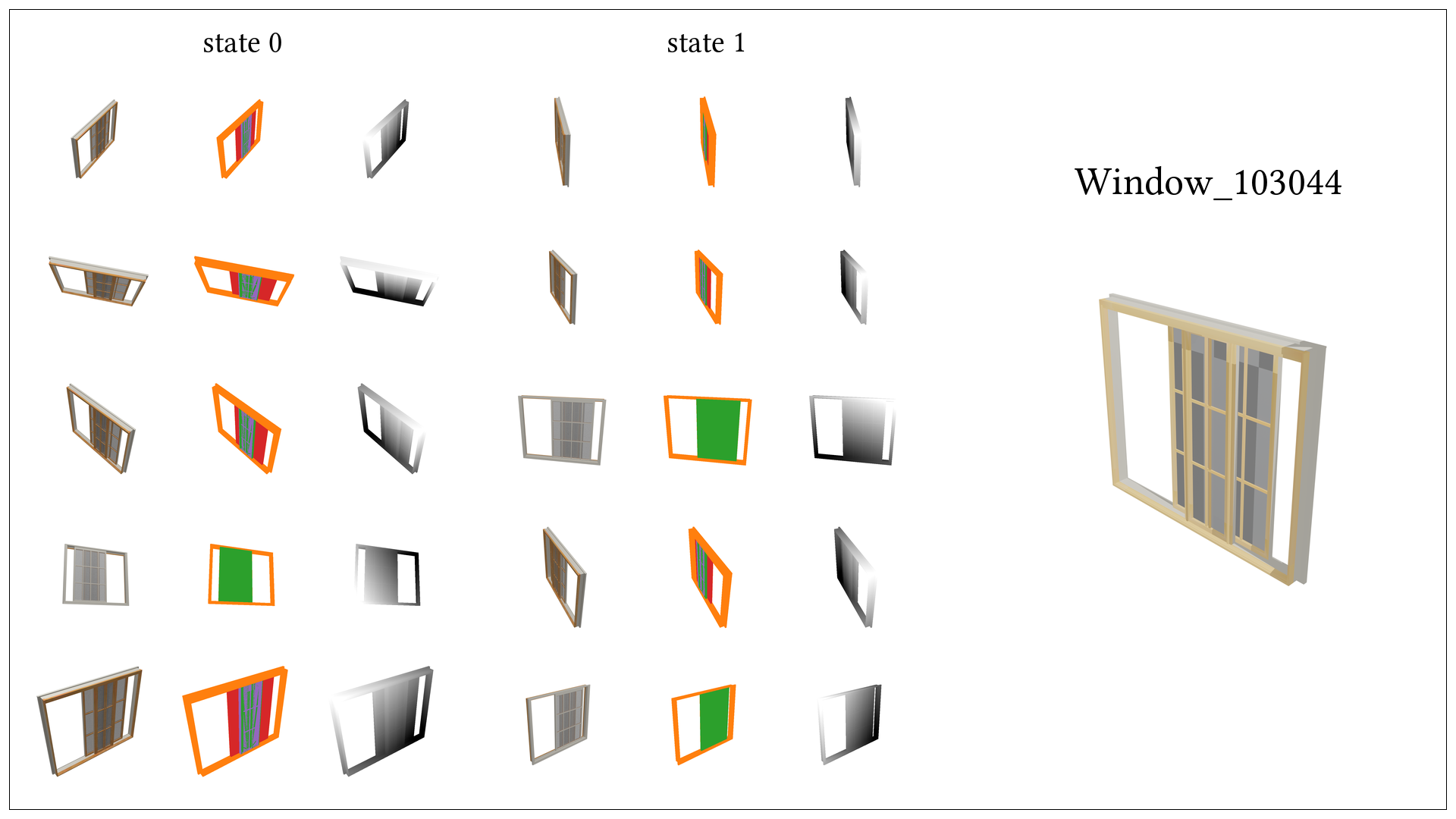
Articulate-100 Benchmark
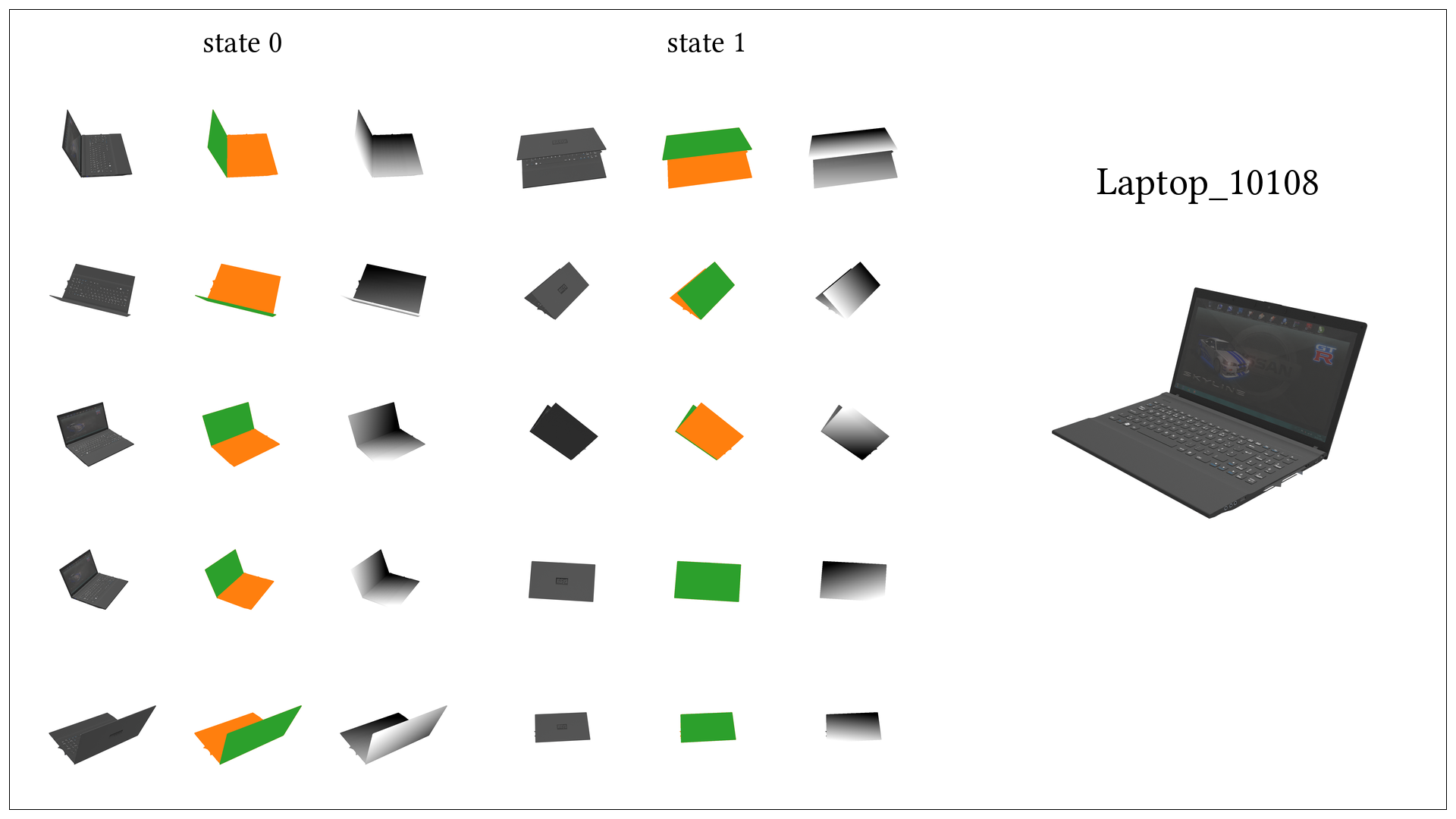
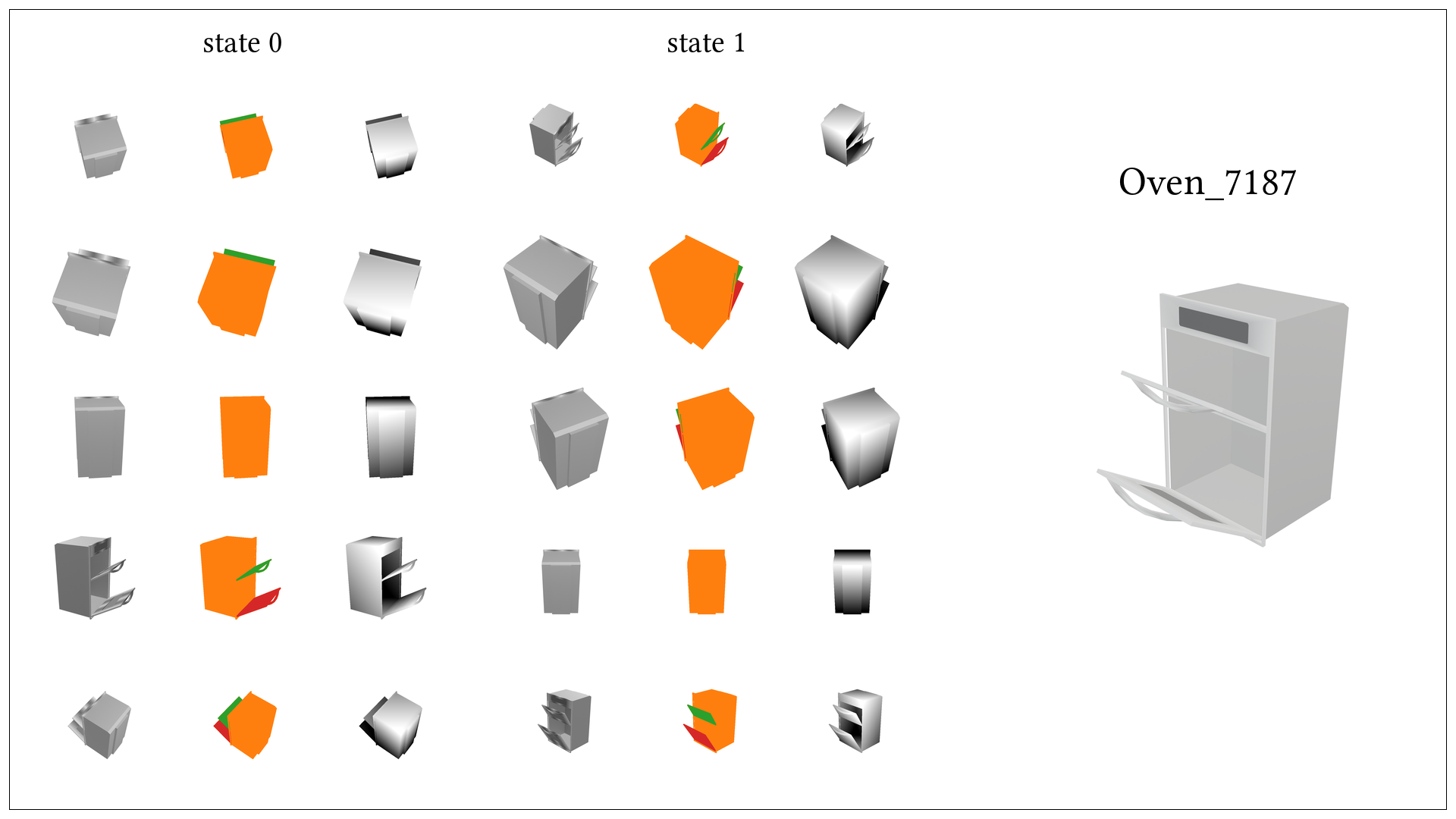
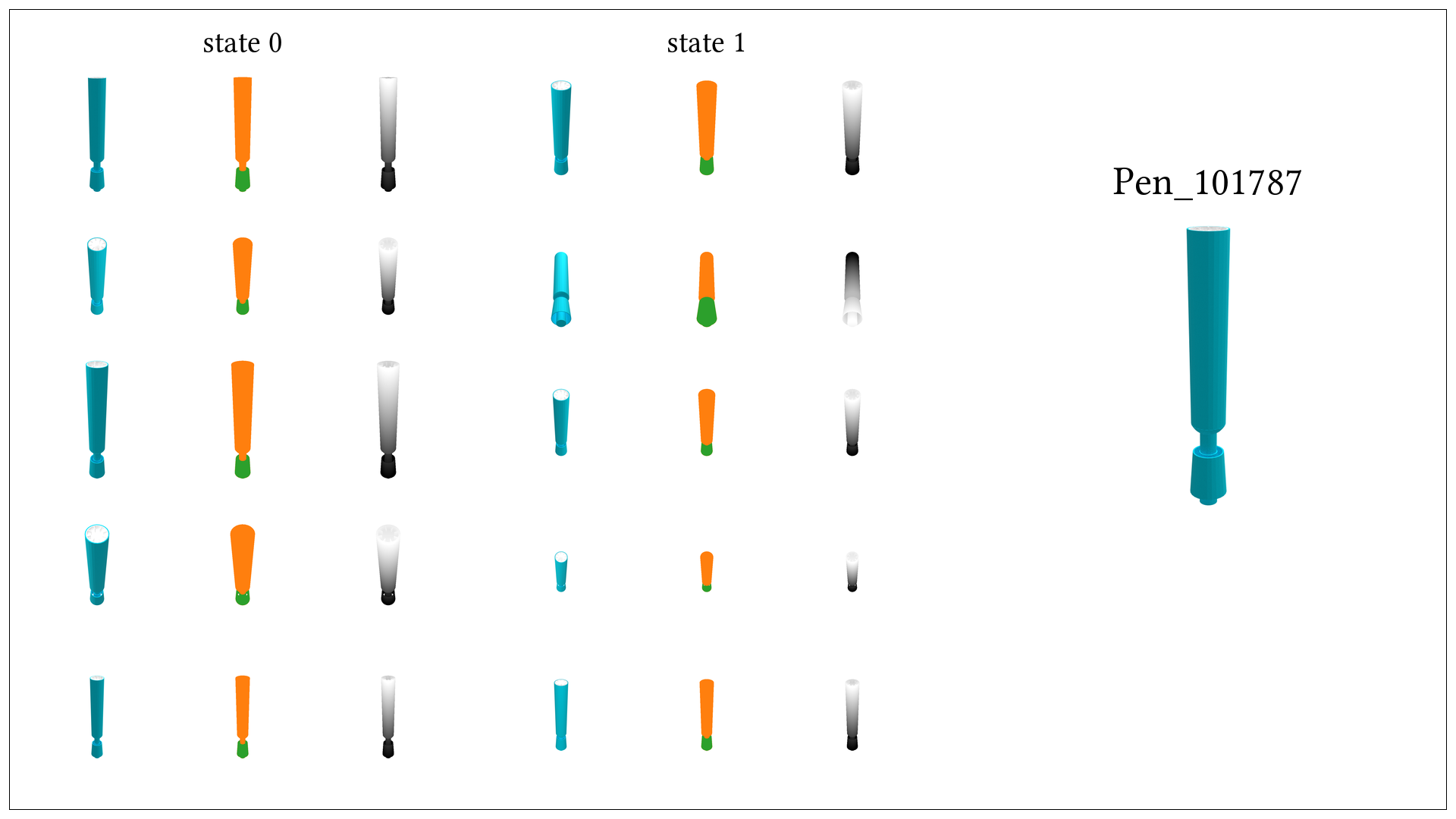
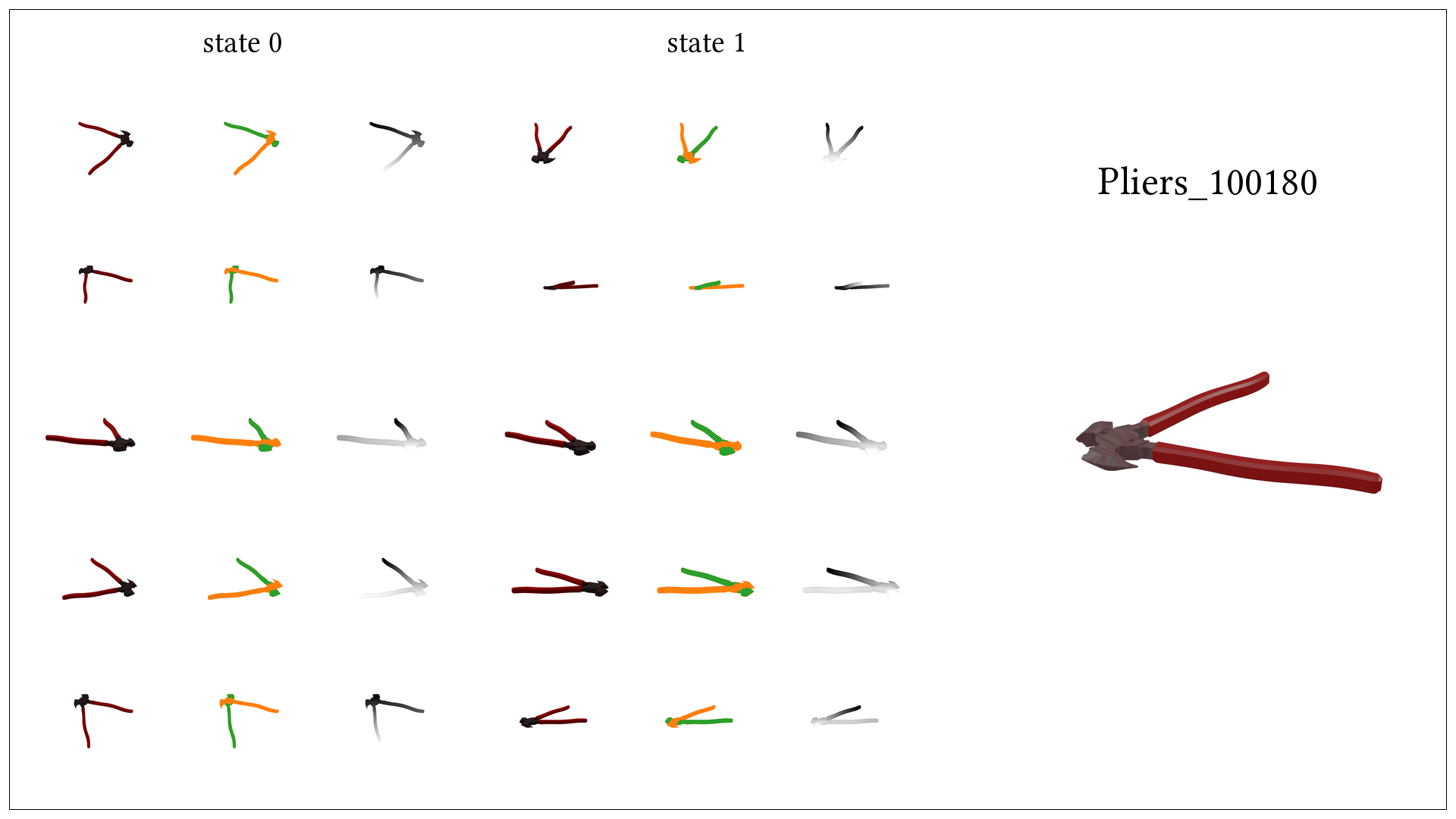
Articulate-100 is a new benchmark of 100 articulated objects spanning 16
PartNet-Mobility categories. Each card shows one object: a grid of train
views at the start and end articulation states (left), and the
canonical-pose render of the textured mesh (right). Use the arrows to
scroll through. The full dataset is available on
Hugging Face.